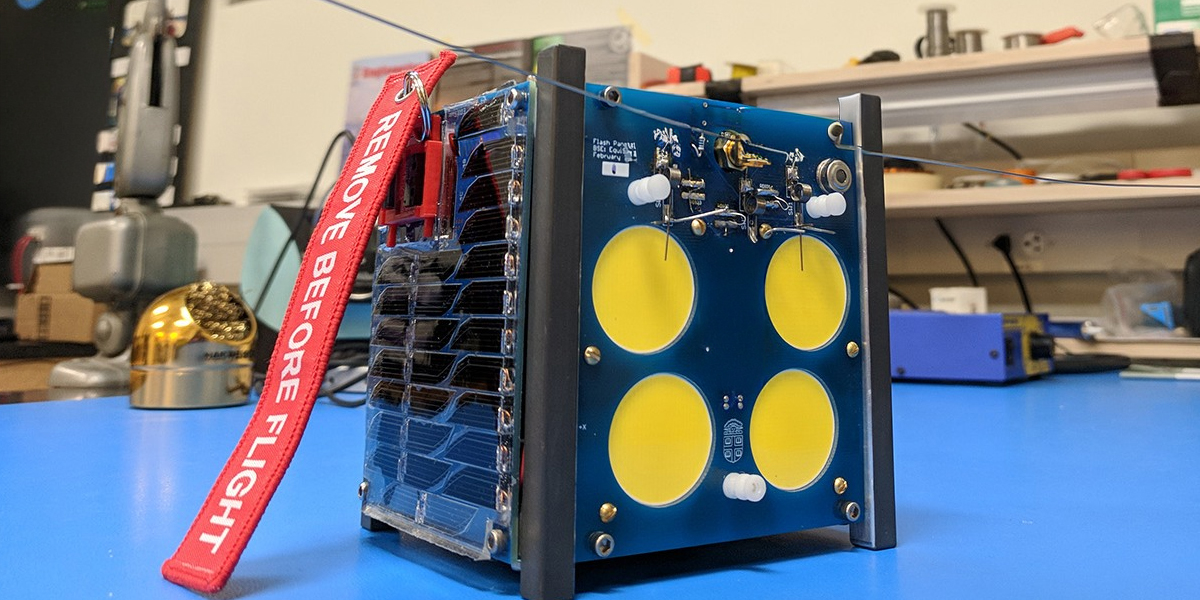
Cubesat: Turnkey vs. Kit Options
Choosing the Right Path for Your Mission
When you're ready to move from mission concept to actual hardware procurement, you face a fundamental decision that shapes everything about your satellite program: do you buy a complete turnkey solution or assemble your mission from kit components? This choice determines your timeline, budget, risk profile, team requirements, and ultimately your probability of mission success.
The difference between these approaches is more profound than simply buying assembled versus unassembled hardware. Turnkey solutions represent a fundamentally different philosophy about satellite development, one that prioritizes speed, reliability, and risk reduction by leveraging proven integrated platforms. Kit approaches offer maximum flexibility and learning opportunities but transfer substantially more integration risk and development time to your team. Neither approach is inherently superior. The right choice depends on your specific mission objectives, team capabilities, schedule constraints, and organizational priorities.
Understanding this decision requires looking beyond surface-level comparisons of component costs or feature lists. You need to understand the hidden complexities of satellite integration, the real timeline implications of design iterations, and the often-underestimated challenge of achieving reliable on-orbit performance with custom-integrated systems. Let's examine what each approach actually means in practice and how to determine which path aligns with your mission requirements.
What Turnkey and Kit Actually Mean in Satellite Development
The terminology around satellite procurement can be confusing because different providers use these terms to describe various levels of integration and support. Clarifying what these options actually deliver helps you evaluate proposals accurately and avoid mismatched expectations.
A true turnkey CubeSat solution provides you with a complete, flight-ready spacecraft bus that has been integrated, tested, and validated as a complete system. The platform includes power generation and management, onboard computing, attitude determination and control, communications, structural elements, and thermal management working together as a proven unit. The supplier has already solved the integration challenges, validated the interfaces between subsystems, and demonstrated that the complete platform functions reliably as an integrated whole. Your primary task becomes configuring the platform for your specific payload and mission requirements rather than designing and integrating a satellite from scratch.
Blackwing Space and similar commercial providers deliver turnkey platforms where the fundamental satellite architecture has been validated through testing and ideally through flight heritage. You specify your payload requirements, power needs, pointing accuracy, and communications parameters, and the platform is configured to meet those specifications. The supplier handles system-level integration testing, provides documentation of interface specifications, and often includes ground segment support and operational services as part of the solution.
Kit approaches span a wider spectrum of integration levels. At one end, you have true component-level kits where you receive individual circuit boards, structural elements, solar panels, batteries, and other subsystems that you must integrate into a functioning satellite. Your team becomes responsible for mechanical integration, electrical harnessing, thermal design, systems engineering, and validation testing. This requires significant technical capability, specialized equipment, and extended development timelines. The educational value can be substantial, but so are the risks and resource requirements.
Some vendors offer what might be called "semi-integrated" kits that provide partially assembled subsystems or modules that still require significant integration work but reduce some of the lowest-level assembly tasks. These middle-ground solutions attempt to balance flexibility with reduced integration burden, though they still place substantial systems engineering responsibility on the customer team.
The critical distinction isn't just about who physically assembles components. It's about who takes responsibility for system-level performance, who validates that all subsystems work together reliably, and who has the experience and test infrastructure to catch integration issues before they become on-orbit failures. This responsibility transfer represents the fundamental difference between approaches.
The True Cost Comparison Goes Beyond Component Pricing
When organizations first explore satellite procurement options, kit approaches often appear dramatically cheaper based on component pricing comparisons. A bill of materials for individual subsystems might total fifty to seventy-five thousand dollars, while turnkey platforms from commercial providers cost one hundred fifty thousand to three hundred thousand dollars or more. This apparent cost difference drives many teams toward kit approaches without fully accounting for the hidden costs of custom integration.
The component pricing tells only a small part of the cost story. Kit-based development requires substantial investment in personnel time, test equipment, facilities, and program management that often exceeds the initial component savings. A university team or small startup pursuing a kit approach typically dedicates three to five full-time-equivalent person-years to satellite development before reaching launch readiness. Even using conservative loaded labor cost assumptions, this represents two hundred thousand to four hundred thousand dollars in personnel expense. Organizations often don't account for this cost explicitly because it's distributed across existing staff or student time, but it represents real resource consumption that could be directed toward other priorities.
Test equipment and facilities for satellite integration add significant costs that kit builders must absorb. You need thermal vacuum chambers, vibration test capabilities, clean room facilities, precision measurement equipment, and specialized tooling for mechanical integration. Universities might have some of this infrastructure available, but access is typically limited and comes with opportunity costs. Commercial organizations usually must contract these services or build limited in-house capability, adding fifty thousand to one hundred fifty thousand dollars to program costs depending on test scope and facility availability.
Component procurement for kit builds involves hidden costs beyond the base prices. You need to qualify vendors, manage supply chains for dozens of components from different suppliers, handle international shipping and customs for some items, maintain buffer inventory for critical components, and manage obsolescence risks as development timelines extend. This procurement overhead might add fifteen to twenty-five percent to component costs while consuming significant project management bandwidth.
The risk costs of kit development are harder to quantify but potentially most significant. First-time CubeSat builders face failure rates approaching sixty percent, with integration issues representing a major failure mode. If your satellite fails due to an integration error that a commercial platform would have caught through established testing protocols, you've lost not just the satellite cost but also your launch expense, payload development investment, and most critically the mission data you hoped to collect. For a research mission, this might represent a graduate student's thesis work or a critical technology demonstration that delays program advancement by years.
Turnkey solutions consolidate these costs into a transparent up-front price that includes the supplier's investment in systems engineering, integration testing, documentation, and support. The platform cost reflects amortized development expenses across multiple customers, shared manufacturing infrastructure, established supply chains, and the benefit of iterative design improvements based on flight experience. You're paying for the platform itself but also for the supplier's systems knowledge, their test infrastructure, their supplier relationships, and their commitment to mission success.
For organizations where mission success is the primary objective rather than maximizing educational value from hands-on integration work, turnkey platforms often represent lower total cost and dramatically lower risk-adjusted cost compared to kit approaches. The component price difference becomes less significant when you account for the complete cost structure and risk profile.
Timeline Implications Extend Far Beyond Assembly Time
Schedule considerations often prove decisive in the turnkey versus kit decision, though teams frequently underestimate the timeline differences during initial planning. The time from procurement decision to launch-ready satellite varies by an order of magnitude between approaches, with downstream implications for mission relevance, funding continuity, and team retention.
Turnkey platforms configured for specific missions typically deliver launch-ready spacecraft in six to twelve months from contract execution. This timeline includes supplier lead times for long-lead components, platform configuration for your specific requirements, integration of your payload, system-level testing, and preparation of flight documentation. Suppliers can achieve these timelines because the fundamental platform design is already validated, manufacturing processes are established, test procedures are proven, and documentation templates exist. You're customizing a known-good baseline rather than developing from scratch.
Kit-based approaches generally require eighteen months to three years to reach launch readiness for first-time teams, with timelines extending even longer when issues arise during integration or testing. This extended timeline reflects the learning curve for satellite integration, the iterative nature of custom development, and the reality that integration problems often aren't discovered until late in the development cycle when they're most expensive and time-consuming to resolve.
Consider the typical timeline for a university team pursuing a kit approach. The first six months involve detailed mission requirements definition, subsystem selection, interface design, and procurement planning. The next six to nine months cover component procurement, which often encounters delays as suppliers face their own lead times and backorders. Actual integration begins twelve to fifteen months into the program, and here's where timelines become unpredictable. Teams discover interface mismatches, power budget issues, thermal design problems, or software integration challenges that require component changes, mechanical redesign, or additional development work. Each iteration adds months to the schedule while consuming team bandwidth and budget reserves.
Testing phases for kit builds take longer because teams lack established test procedures and must develop methodologies through trial and error. You might spend three months qualifying your thermal design through repeated thermal vacuum cycles, discovering issues that require hardware modifications between test campaigns. Vibration testing might reveal mechanical design problems that require structural reinforcement. Each issue adds time and cost while the clock runs on your planned launch date.
The schedule risk with kit approaches comes from the uncertainty about when you'll discover and resolve integration issues. A turnkey provider has already encountered and solved most integration challenges through previous development work and can confidently commit to delivery timelines. Kit builders face substantial risk of schedule overruns that can threaten mission viability, particularly for university programs where student team members graduate or commercial programs where funding tranches depend on demonstrating progress.
For missions with time-critical objectives, whether collecting data for ongoing research programs, demonstrating technologies for follow-on investment decisions, or competing for market opportunities with time-sensitive windows, turnkey platforms provide schedule certainty that kit approaches simply cannot match. The cost of a twelve-month schedule slip often exceeds the price difference between turnkey and kit options when you account for extended program costs and delayed mission value.
Integration Complexity and Systems Engineering Requirements
The technical complexity of satellite integration represents perhaps the most underestimated challenge in kit-based development. Even teams with strong engineering backgrounds often discover that satellite systems integration demands specialized knowledge, careful attention to interface management, and rigorous systems engineering discipline that exceeds their initial expectations.
Satellites operate in an unusually demanding environment where even small integration errors can cause complete mission failure. Power systems must work reliably across wide temperature ranges with no maintenance. Communications must function through the noise and interference of the space environment. Attitude control must achieve pointing accuracy using sensors and actuators that have never been tested together before launch. Every electrical interface, mechanical connection, and software protocol must work correctly the first time because there's no opportunity for repair after deployment.
Successful integration requires managing hundreds of interface specifications across electrical, mechanical, thermal, and software domains. Power distribution must deliver correct voltages at sufficient current to every subsystem while maintaining efficiency and protecting against faults. Communication buses must operate reliably for years without data corruption. Mechanical mounting must survive launch loads while maintaining alignment tolerances for optical payloads or antenna pointing. Thermal design must keep all components within operating temperature ranges during eclipse periods and direct sun exposure.
Teams building from kits discover that component datasheets tell only part of the integration story. A solar panel datasheet specifies electrical output under standard test conditions, but integrating it into your satellite requires understanding how output varies with temperature, angle, and aging while designing power management circuitry that extracts maximum energy across all conditions. A reaction wheel datasheet provides torque and momentum specifications, but achieving stable attitude control requires developing control algorithms that account for wheel dynamics, sensor noise, and external disturbances while meeting pointing requirements for your specific payload.
System-level validation becomes particularly challenging for kit builders because you lack the institutional knowledge of what can go wrong and how to test for it. A commercial platform provider has learned through previous programs which failure modes to test for, which environmental conditions drive design margins, and which component interactions cause problems. This accumulated knowledge shapes their test procedures and validation approaches. Kit builders must develop this knowledge through experience, which means discovering issues late in development or missing problems entirely until after launch.
Turnkey solutions transfer this systems integration burden to suppliers who have already solved these challenges and validated their solutions through testing and ideally through flight heritage. The platform architecture reflects design decisions informed by actual on-orbit performance and lessons learned from previous missions. Interface specifications have been proven through multiple integration cycles. Test procedures incorporate knowledge of likely failure modes and effective validation methods. You benefit from the supplier's accumulated systems knowledge without having to develop that expertise in-house.
This systems knowledge transfer becomes particularly valuable for organizations where satellite development isn't the core competency. A space startup focused on novel payload technology shouldn't divert engineering resources to solving spacecraft bus integration challenges that commercial providers have already addressed. A university research group investigating atmospheric science should focus their effort on payload development and data analysis rather than becoming satellite systems engineers. Turnkey platforms allow you to concentrate resources on your mission's unique value proposition rather than rebuilding infrastructure that already exists in the commercial market.
Support, Documentation, and Institutional Knowledge
The ongoing support and documentation provided with turnkey solutions versus kit purchases represents a critical but often overlooked differentiator that significantly impacts development efficiency and mission success probability. The difference extends well beyond user manuals to encompass the institutional knowledge, technical support, and problem-solving assistance that shape your team's ability to execute successfully.
Commercial turnkey providers deliver comprehensive documentation that reflects their deep understanding of the platform and its operation. You receive detailed interface control documents specifying every electrical, mechanical, and software interface. You get test procedures validated through previous missions. You access design justification documents explaining why particular components were selected and how margins were allocated. Flight operations guides based on actual on-orbit experience tell you how to command the spacecraft and interpret telemetry effectively.
More importantly, you gain access to engineers who have built, tested, and operated these platforms. When you encounter unexpected behavior during integration testing, you can consult with people who have seen similar situations and can quickly identify likely causes. When you're planning operations procedures, you benefit from their experience with what works reliably and what proves problematic. This human support and knowledge transfer often proves more valuable than any written documentation.
Kit purchases typically include basic datasheets and minimal assembly instructions but lack the comprehensive systems documentation and support infrastructure that enables efficient development. You might receive schematics and board layouts, but without design rationale documents explaining why particular approaches were taken or test data showing how components perform under various conditions. When problems arise, you're largely on your own to debug issues and develop solutions.
The knowledge gap becomes particularly acute when dealing with integration issues or operational anomalies. A turnkey provider can tell you that certain telemetry patterns indicate a specific thermal condition or that a particular command sequence reliably recovers from a fault mode. Kit builders must develop this operational knowledge through costly trial and error, and mission-critical learning often happens during the mission when mistakes are unrecoverable.
For university teams, the educational mission might justify accepting this knowledge gap as part of the learning experience. Students gain valuable problem-solving experience and deep system understanding by working through integration challenges independently. However, this educational value comes at the cost of extended timelines, higher failure risk, and substantial faculty supervision requirements. Universities must honestly assess whether their program priorities align with these tradeoffs.
For commercial missions or research programs where mission success is paramount, the support and documentation provided with turnkey platforms substantially reduces risk and accelerates development. You're not just buying hardware; you're buying access to the supplier's institutional knowledge and their commitment to helping you succeed. This intangible value often justifies the price difference between turnkey and kit approaches.
Mission Success Rates Tell the Real Story
Perhaps the most compelling argument for turnkey platforms comes from examining actual mission success rates. The data shows a clear correlation between integration approach and on-orbit performance, though tracking these statistics precisely requires careful definition of what constitutes mission success versus partial success versus failure.
First-time university CubeSat builders using kit approaches or custom-designed platforms face mission failure rates approaching sixty percent when measured against original mission objectives. Some satellites never establish communications after deployment. Others achieve initial contact but fail within days or weeks due to power system problems, attitude control issues, or software faults. Some operate but with degraded performance that prevents collecting meaningful payload data. These failures typically trace back to integration issues, insufficient testing, or design flaws that might have been caught with more rigorous systems engineering.
The financial and programmatic cost of these failures extends well beyond the hardware investment. University teams might spend three to four years developing a satellite only to lose it within days of deployment, meaning graduating students never see their work produce mission data. Research programs built around anticipated satellite data must completely restructure when the platform fails. Technology demonstrations that could enable follow-on programs never generate the performance data needed to secure additional funding.
Turnkey platforms from established commercial providers demonstrate substantially higher mission success rates, typically exceeding eighty-five to ninety percent when measuring against stated mission objectives. This improvement reflects the platforms' design maturity, proven integration processes, comprehensive testing, and the benefit of iterative improvements based on flight experience. When these platforms do experience issues, problems more often trace to payload integration or operations procedures rather than fundamental platform failures.
The reliability difference becomes even more pronounced when examining mission longevity. Kit-built satellites that achieve initial operations often experience early failures as latent integration issues manifest under sustained on-orbit operation. Turnkey platforms more frequently achieve their design life and often exceed it substantially, continuing to generate valuable data for years after initial deployment.
Alba Orbital's experience demonstrates this reliability advantage in practice. Their commercial platform has supported dozens of successful missions across diverse customer segments, building a reputation for reliable performance that attracts new customers and generates repeat business. This success rate would be nearly impossible to achieve with kit-based approaches where each mission represents a unique custom integration.
For organizations where mission success directly impacts program continuation, research outcomes, or commercial viability, the reliability difference between turnkey and kit approaches justifies substantial price premiums. The expected value calculation strongly favors paying more for platforms with proven success rates over accepting higher failure risk to save on component costs.
When Kit Approaches Make Sense
Despite the strong arguments for turnkey platforms, kit approaches serve legitimate purposes for certain mission types and organizational objectives. Understanding when kits represent the better choice requires honest assessment of your priorities and constraints.
Educational missions where hands-on learning represents the primary objective often benefit from kit approaches despite their longer timelines and higher risk profiles. Universities running satellite programs primarily to train students in systems engineering gain substantial value from the integration challenges that turnkey platforms eliminate. Students working through subsystem selection decisions, interface design problems, and integration debugging develop deep understanding that wouldn't come from configuring a pre-integrated platform.
The key question for educational programs is whether the learning value of custom integration justifies the timeline extension, increased failure risk, and higher total cost when all factors are considered. For some programs, particularly those with stable long-term funding and faculty supervision, these tradeoffs align with institutional objectives. For others, especially programs facing graduation timelines or limited budgets, turnkey platforms that allow students to focus on payload development and operations might deliver better educational outcomes per dollar invested.
Research programs pursuing genuinely novel platform technologies sometimes require kit approaches because no commercial platform meets their requirements. If you're developing advanced propulsion systems, experimental power architectures, or novel communication protocols, you might need to build custom platforms that integrate these technologies. However, even these programs should carefully assess whether custom bus development is truly necessary or whether commercial platforms could host experimental payloads while providing validated baseline capabilities for comparison.
Extremely cost-constrained programs might find kit approaches necessary simply to fit within available budgets, though this decision should account for the real cost of personnel time and support infrastructure. Organizations that already possess satellite integration expertise, test facilities, and systems engineering capability from previous programs face lower incremental costs for kit-based development compared to first-time builders. Their amortized infrastructure costs and accumulated institutional knowledge reduce the cost and risk penalties of custom integration.
Making the Decision for Your Mission
Choosing between turnkey and kit approaches requires systematically evaluating your specific circumstances against several key criteria. Start by honestly assessing your team's technical capability and available resources. Do you have experienced systems engineers with satellite integration backgrounds? Do you have access to appropriate test facilities? Can you dedicate multiple person-years to custom development? If the answers are largely negative, turnkey platforms substantially reduce your risk.
Examine your timeline requirements and schedule flexibility. Can your mission tolerate a three-year development cycle with potential for overruns? Do you face launch windows, research deadlines, or funding gates that create hard schedule constraints? Missions with firm timeline requirements strongly favor turnkey approaches that provide schedule certainty.
Consider your risk tolerance and the consequences of mission failure. What happens if your satellite fails to achieve its objectives? Can you absorb the loss and try again, or would failure terminate your program? High-stakes missions justify paying for proven reliability that turnkey platforms provide.
Evaluate where you want to focus your limited engineering resources. What aspects of your mission represent unique value creation? Should your team concentrate on payload development, data analysis, novel operating concepts, or other mission-specific capabilities rather than rebuilding spacecraft bus infrastructure? Most space startups should focus technical effort on their differentiated payload technology rather than custom bus development.
Review your complete cost picture including personnel time, test services, program management overhead, and risk costs. The component price comparison tells only part of the story. Calculate your true total cost of ownership for each approach accounting for all resource consumption, and compare that against the value you place on schedule certainty and higher success probability.
The Emerging Middle Ground
The market is developing hybrid approaches that attempt to capture benefits from both turnkey and kit philosophies. Some suppliers offer semi-integrated platforms where core spacecraft bus functions come proven and validated while payload integration and mission-specific customization remain flexible. These solutions aim to provide the reliability and schedule benefits of turnkey approaches while maintaining some of the educational value and customization flexibility that motivates kit purchases.
Modular platform architectures with well-defined interfaces allow some mix-and-match capability where you select turnkey baseline platforms but swap in alternative subsystems for specific capabilities. You might use a commercial platform's proven power, computing, and communications systems while integrating a custom attitude control system for your particular pointing requirements. This approach concentrates custom development on areas where you need unique capabilities while leveraging commercial solutions for baseline functions.
Open-source hardware projects like PyCubed enable another hybrid path where you can build from validated reference designs that others have flown successfully. You gain some of the flexibility of kit approaches while benefiting from design validation and documentation that other teams have created. However, you still bear integration responsibility and lack the commercial support infrastructure that turnkey providers deliver.
Blackwing Space's ROOK OBC exemplifies this middle-ground philosophy by offering a commercial implementation of PyCubed-compatible architecture with professional support, comprehensive testing, and American manufacturing. Teams that want PyCubed's proven design and familiar development environment can access it through a commercial product backed by proper validation and support rather than assembling their own hardware from community designs.
These hybrid approaches work best for organizations with moderate technical capability that want to maintain some hands-on involvement while reducing the highest-risk aspects of custom integration. They require careful attention to where you draw boundaries between commercial baseline and custom development to ensure you achieve intended benefits without reintroducing excessive integration risk.
The Bottom Line for Most Missions
For the majority of satellite missions, particularly first-time programs, commercial missions with firm schedules, and research programs where satellite data collection represents the primary objective rather than spacecraft development itself, turnkey platforms deliver superior value compared to kit approaches when evaluated across the complete cost, schedule, and risk profile.
The upfront price premium for turnkey solutions quickly disappears when you account for the real cost of personnel time, test services, and program management required for custom integration. The schedule certainty and substantially higher mission success rates that turnkey platforms provide become even more valuable than cost savings for most programs. The ability to focus your limited engineering resources on mission-specific capabilities rather than rebuilding spacecraft infrastructure accelerates progress toward your actual objectives.
Kit approaches serve specific purposes for educational programs emphasizing hands-on learning or research programs pursuing genuinely novel platform technologies. However, teams pursuing these approaches should do so with realistic expectations about timelines, costs, and risks rather than optimistic assumptions about component pricing translating to program savings.
The decision ultimately comes down to honest assessment of your priorities, capabilities, and constraints. If mission success, schedule predictability, and efficient resource utilization drive your program, commercial turnkey platforms from proven suppliers represent the lower-risk, lower-total-cost approach for most missions. If educational value from integration challenges or truly unique technical requirements drive your program, kit approaches might justify their additional cost and risk.
Whatever path you choose, selecting the right platform or approach represents one of the most consequential decisions in your satellite program. Take time to thoroughly evaluate options, honestly assess your capabilities and constraints, and choose the approach that best aligns with your mission objectives and organizational priorities.
Contact Blackwing Space to discuss turnkey platform options that can accelerate your mission timeline while reducing integration risk through proven American-made nanosatellite solutions.

Related Articles