University CubeSat Projects: Complete Guide for Student Teams
Everything student teams need to know about starting a university CubeSat project including funding, platform selection, and launch opportunities
Starting a University CubeSat Project: The Complete Student Guide
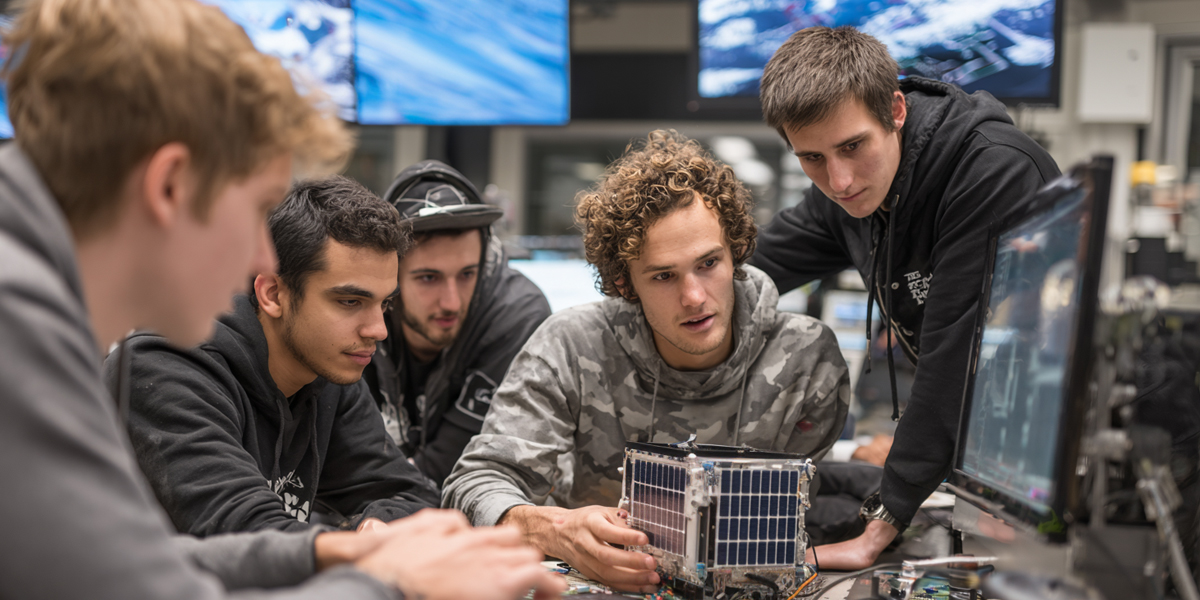
So your university team wants to build and launch a CubeSat? You're joining hundreds of student teams worldwide who have successfully deployed satellites into orbit. University CubeSat projects provide hands-on experience that transforms classroom theory into real-world engineering skills, but knowing where to start can be overwhelming.
This comprehensive guide covers everything student teams need to know about university CubeSat projects: finding funding, selecting platforms, navigating regulations, managing timelines, and actually getting your satellite to orbit. Whether you're a freshman exploring the idea or a senior leading the project, this guide will help your university CubeSat project succeed.
Why Universities Build CubeSats
University CubeSat projects offer educational benefits no classroom can match. Students gain hands-on spacecraft engineering experience working with real flight hardware. Teams learn project management coordinating multi-year efforts across disciplines. Technical skills develop through actual satellite design, integration, and testing. Problem-solving abilities sharpen when dealing with real constraints and failures. And career preparation accelerates as aerospace employers specifically seek CubeSat experience.
Beyond individual benefits, university CubeSat programs build institutional capability. Schools establish space engineering programs attracting top students and faculty. Research opportunities expand with on-orbit experimentation platforms. Industry partnerships form around satellite projects. And alumni networks strengthen through shared project experiences.
Most importantly, university CubeSat projects are actually achievable. Unlike traditional satellites requiring millions of dollars and decades of experience, student teams can design, build, and launch CubeSats within 2-4 year timeframes matching academic cycles.
Understanding CubeSat Basics for Student Projects
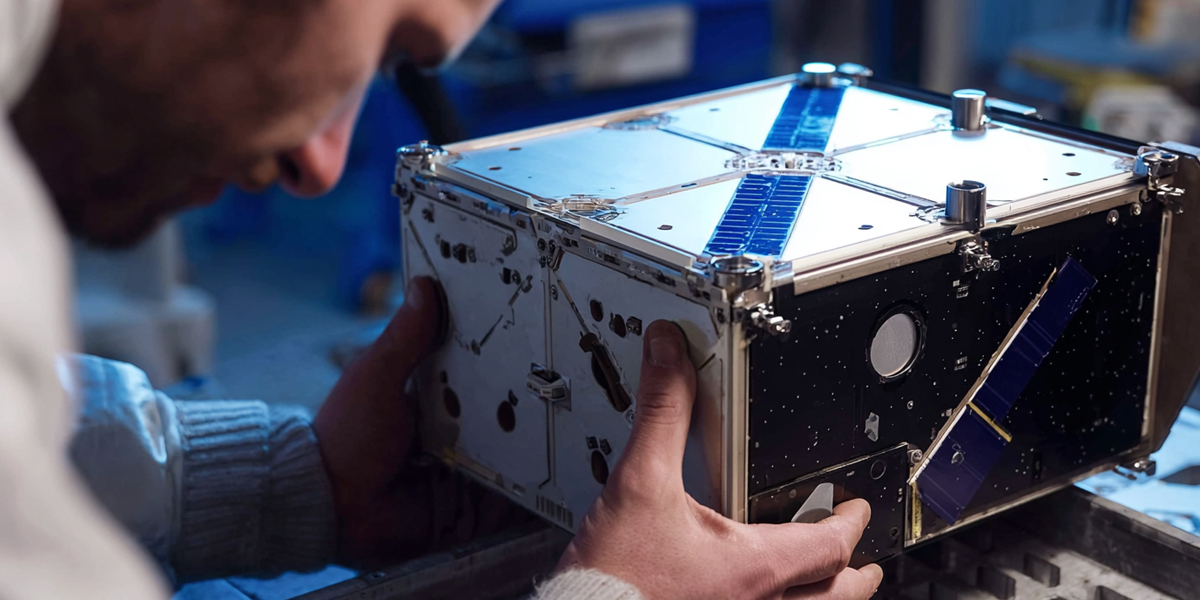
Before diving into project planning, student teams should understand CubeSat fundamentals. CubeSats are small satellites built to standardized dimensions based on 10x10x10 cm "units" (U). A 1U CubeSat measures 10x10x10 cm and weighs up to 1.33 kg. A 3U CubeSat measures 10x10x30 cm and weighs up to 4 kg. And a 6U CubeSat measures 20x10x30 cm and weighs up to 8 kg.
University CubeSat projects typically use 1U or 3U form factors. These sizes provide sufficient volume for educational payloads while remaining affordable for student budgets. The standardized form factor enables using commercial deployers and simplifies launch integration.
Every university CubeSat includes essential subsystems: structure providing mechanical framework, power system with solar panels and batteries, communication system for ground contact, onboard computer for command and control, attitude determination and control for orientation, and payload for mission-specific functions.
Student teams either build these subsystems from scratch, purchase commercial components, or buy complete platform solutions. Each approach offers different learning opportunities and resource requirements.
The Two Approaches to University CubeSat Projects
Student teams face a fundamental choice in how to approach their university CubeSat project:
Build-From-Scratch Approach
Some university CubeSat teams design and build every subsystem in-house. This maximizes hands-on learning as students design circuit boards, write firmware, machine structures, and integrate everything together.
Advantages: Maximum educational value with deep technical learning, lower hardware costs (though labor is "free" student time), and complete control over design decisions.
Challenges: Requires 3-5 years from start to launch, demands significant faculty mentorship, needs access to specialized facilities and equipment, carries high technical risk from first-time designs, and often results in delays or failures as learning experiences.
Best for: Universities with established space programs, teams with experienced faculty advisors, projects emphasizing learning over mission success, and programs with multi-year funding commitment.
Commercial Platform Approach
Other university CubeSat teams purchase commercial platforms providing proven bus subsystems, then focus their efforts on payload development and mission operations.
Advantages: Reduced timeline to 1-2 years from start to launch, lower technical risk with proven hardware, allows focusing on unique payload rather than reinventing basics, and increases probability of successful mission.
Challenges: Higher upfront hardware costs, less hands-on subsystem development experience, and dependence on vendor support and delivery.
Best for: Teams starting their first university CubeSat project, programs without extensive spacecraft expertise, projects with specific scientific objectives, and universities seeking near-term flight opportunities.
The Hybrid Approach
Many successful university CubeSat projects combine both approaches. Teams purchase commercial platforms for critical subsystems (power, communications) while building educational components like payload instruments or experiment modules. This balances educational value with mission success probability.
Funding Your University CubeSat Project
Money represents the most common challenge for university CubeSat projects. Complete missions cost $100,000-$500,000+ depending on approach and ambition. Student teams must identify multiple funding sources:
NASA Funding Programs
CubeSat Launch Initiative (CSLI): NASA's primary educational CubeSat program provides free launch opportunities to selected university projects. Competition is intense with acceptance rates around 10-20%, but winning teams save $50,000-$200,000 in launch costs. Applications require complete mission plans, team qualifications, and educational impact descriptions.
Small Spacecraft Technology Program: NASA occasionally offers funding for technology demonstration missions using CubeSats. These grants can provide $100,000-$500,000 but require advancing specific NASA-relevant technologies.
EPSCoR grants: NASA's Established Program to Stimulate Competitive Research provides opportunities for universities in underrepresented states to conduct space research including CubeSat missions.
National Science Foundation (NSF)
NSF supports university research including space-based experiments through various programs. Student teams can apply for research grants where CubeSats serve as experimental platforms. Successful proposals emphasize scientific merit and educational broader impacts.
University Internal Funding
Academic departments: Engineering or physics departments may provide seed funding for student projects demonstrating educational value.
Research offices: Universities often have grant programs supporting faculty-student research collaborations.
Innovation funds: Some schools maintain funds for innovative student projects.
Capstone project budgets: Senior design courses may fund student projects including CubeSat development.
Industry Sponsorships
Aerospace companies sponsor university CubeSat projects for several reasons: recruiting pipeline development, technology testing opportunities, community engagement, and brand building. Student teams can approach companies with sponsorship proposals emphasizing student talent recruitment and logo visibility.
Crowdfunding and Alumni
Some university CubeSat teams successfully raise $20,000-$100,000 through crowdfunding campaigns on platforms like Kickstarter or university-specific fundraising sites. Alumni often support space projects especially if they studied aerospace or engineering.
Realistic Budget Planning
Student teams should budget realistically for complete missions:
Build-from-scratch approach: Components and materials cost $20,000-$50,000, fabrication and testing tools cost $10,000-$30,000, and launch services cost $50,000-$200,000. Total: $80,000-$280,000+
Commercial platform approach: CubeSat platform costs $10,000-$100,000, payload development costs $5,000-$50,000, integration and testing costs $5,000-$20,000, and launch services cost $25,000-$200,000. Total: $45,000-$370,000+
Smart teams build 20-30% contingency for unexpected costs and delays.
Selecting a CubeSat Platform for University Projects
If your team chooses the commercial platform approach, selecting the right vendor is critical. University CubeSat projects have unique requirements compared to commercial missions:
Key Criteria for Student Teams
Educational pricing: Universities need affordable platforms matching academic budgets. Look for vendors offering educational discounts or transparent pricing under $100,000 for 3U platforms.
Documentation quality: Student teams need comprehensive documentation since faculty advisors may not have spacecraft expertise. Clear interfaces, integration guides, and support materials are essential.
Technical support: Students will have questions. Vendors should provide responsive technical support understanding academic timelines and learning needs.
Timeline compatibility: University projects follow academic calendars. Vendors should deliver platforms within 6-12 months matching student graduation cycles.
Payload flexibility: Educational missions often involve custom experiments. Platforms need flexible payload interfaces accommodating student-designed instruments.
Made in USA options: Domestic manufacturing simplifies export control compliance for U.S. universities and supports learning about American space industry.
Why Blackwing Space Serves University CubeSat Projects
Blackwing Space specifically designed platforms for organizations like university teams seeking affordable, accessible space access:
Student-friendly pricing: The Sparrow 1U platform starts at $10,000, the Kestrel 3U XL starts at $50,000, and the Osprey 6U XL starts at $100,000. These price points fit university budgets while providing complete, flight-ready platforms.
Transparent costs: Published pricing enables accurate budget planning without lengthy procurement processes. Students know costs upfront for grant applications.
Rapid delivery: Standard platforms deliver in 6-12 months, matching academic year cycles. Students can participate in the complete mission from joining the project through launch.
Educational support: Blackwing understands university needs providing documentation, integration assistance, and technical support suited for student learning.
Payload flexibility: Modular architecture supports diverse educational payloads from simple experiments to sophisticated instruments.
American manufacturing: Tennessee-based production means simplified ITAR compliance, domestic facility tours for student teams, and support for American space industry education.
Turnkey services: Beyond platforms, Blackwing offers ground station access, mission operations support, and FCC licensing assistance - all challenges student teams face.
For university CubeSat projects prioritizing mission success while providing educational value, Blackwing Space offers an ideal balance of affordability, capability, and support.
Building Your Student Team
Successful university CubeSat projects require diverse skills and sustained commitment. Strong teams include:
Project manager: Coordinates overall effort, manages timeline, interfaces with university administration and sponsors. Usually a senior student with leadership experience.
Systems engineer: Owns overall satellite design, manages requirements, coordinates subsystems. Needs broad technical knowledge and attention to detail.
Electrical engineers: Design or integrate power systems, communication boards, and payload electronics. Most university CubeSat teams need 2-4 electrical students.
Mechanical engineers: Handle structural design, thermal analysis, and mechanical integration. Need CAD skills and understanding of space environments.
Computer science/software: Write flight software, ground station code, and mission operations tools. Critical for spacecraft commanding and data processing.
Communications lead: Manages radio systems, ground station operations, and FCC licensing. Often an electrical engineer with RF interest.
Payload specialist: Focuses on mission-specific instruments or experiments. Depends on mission type (camera, sensors, scientific instruments).
Team Management Tips
University CubeSat projects span multiple years with continuous student turnover. Successful teams:
Document everything so knowledge transfers between student generations. Use project management tools tracking tasks, decisions, and progress. Hold regular meetings keeping everyone aligned and engaged. Recruit underclassmen early so they learn before senior students graduate. Create clear role definitions so everyone knows their responsibilities. And celebrate milestones maintaining enthusiasm through the long journey.
Timeline for University CubeSat Projects
Understanding realistic timelines helps student teams plan effectively:
Year 1: Planning and Funding
Months 1-3: Form initial team, identify faculty advisor, research CubeSat basics, and define preliminary mission concept.
Months 4-6: Develop detailed mission plan, identify funding opportunities, and submit grant applications.
Months 7-12: Secure funding commitments, finalize mission requirements, and complete preliminary design.
Year 2: Design and Procurement
Months 13-18: Complete detailed design, order commercial platform or components, and develop payload design.
Months 19-24: Receive platform delivery, begin payload fabrication, and start integration planning.
Year 3: Integration and Testing
Months 25-30: Integrate payload with platform, conduct component testing, and debug systems.
Months 31-36: Complete environmental testing, obtain FCC license, and finalize ground station.
Year 4: Launch and Operations
Months 37-42: Deliver satellite to launch provider, complete final integration, and prepare operations team.
Months 43-48: Launch mission, commission spacecraft, conduct mission operations, and analyze data.
This timeline assumes using commercial platforms. Build-from-scratch approaches typically add 12-24 months.
Common Pitfalls for Student CubeSat Teams
Learning from others' mistakes saves time and money:
Underestimating timeline: Student teams almost always take longer than planned. Build in contingency time.
Insufficient funding: Don't start building without complete funding secured. Running out of money mid-project dooms missions.
Poor documentation: When senior students graduate, institutional knowledge disappears without thorough documentation.
Scope creep: Ambitious students keep adding features. Discipline around requirements prevents never-ending projects.
Inadequate testing: Testing feels less exciting than building, but it prevents in-orbit failures. Allocate sufficient time.
Neglecting regulatory compliance: FCC licensing takes 6-12 months. Start early or face launch delays.
Weak faculty support: Student enthusiasm alone isn't enough. Projects need committed faculty champions who persist through student turnover.
Launch Opportunities for University CubeSats
Getting your satellite to orbit requires securing launch:
NASA CubeSat Launch Initiative
The primary path for U.S. university teams. NASA provides free launches to selected educational missions. Applications open annually with intense competition. Winning requires strong educational justification, feasible technical plan, and capable team demonstration.
Commercial Rideshare
If you don't win NASA CSLI, commercial rideshare offers alternatives. Companies like Spaceflight Inc (SEOPS), Exolaunch, and launch providers directly offer rideshare opportunities. Costs range $25,000-$200,000 depending on satellite size and target orbit.
International Opportunities
Some international space agencies provide launch opportunities for educational CubeSats. However, U.S. teams face export control complexity requiring ITAR compliance.
Regulatory Requirements for Student Teams
University CubeSat projects must navigate several regulatory requirements:
FCC Licensing
All satellites transmitting from U.S. orbit need FCC licenses. The process requires technical documentation, frequency coordination, and orbital debris assessment. Start applications 6-12 months before launch. Universities can apply directly or work with commercial partners providing licensing assistance.
Export Control Compliance
Satellite technology falls under ITAR (International Traffic in Arms Regulations). Student teams must:
Work only with U.S. citizens or permanent residents on technical aspects. Avoid sharing technical data with foreign nationals without licenses. Use U.S.-manufactured components when possible. And maintain required documentation.
University international student participation is allowed for non-ITAR aspects like project management, documentation, and some payload work under guidance.
Orbital Debris Mitigation
All satellites must demonstrate compliance with orbital debris guidelines. CubeSats need 25-year deorbit plans showing spacecraft will naturally reenter atmosphere or actively deorbit within that timeframe.
Ground Station Considerations
Launching your satellite is only half the battle - you need ground stations for communication:
Options for Student Teams
University-built stations: Some schools build ground stations as part of the educational experience. This requires RF expertise, equipment ($5,000-$50,000), and ongoing maintenance.
Commercial ground station networks: Services like AWS Ground Station, Azure Orbital, or Blackwing's ground station access provide turnkey communication without building infrastructure.
Amateur radio networks: For missions using amateur frequencies, existing ham radio networks can provide ground station support.
Partner institution stations: Collaborate with other universities having established ground stations.
Mission Operations for Student Teams
After launch, student teams conduct mission operations:
Commission phase: First 30 days verifying all systems work correctly, establishing reliable communications, and validating spacecraft health.
Nominal operations: Regular operations conducting mission activities, downloading data, monitoring spacecraft health, and executing planned objectives.
Operations team: Rotating shifts of students monitoring spacecraft, executing commands, and responding to anomalies.
Data analysis: Processing and analyzing payload data to achieve mission scientific or technical objectives.
Mission operations provide incredible learning opportunities teaching students real spacecraft control, troubleshooting, and decision-making under pressure.
Career Impact of University CubeSat Experience
Participation in university CubeSat projects significantly enhances career prospects:
Aerospace industry recruiting: Companies actively recruit students with CubeSat experience. It demonstrates practical spacecraft knowledge beyond classroom theory.
Graduate school applications: Research universities value hands-on space experience for graduate program applicants.
Technical interviews: CubeSat projects provide concrete examples for behavioral and technical interview questions.
Professional networks: Student space conferences and competitions build lasting professional relationships.
Leadership development: Multi-year projects develop project management, teamwork, and leadership skills employers seek.
Success Stories: University CubeSat Missions
Hundreds of university teams have successfully flown CubeSat missions:
Cal Poly: Birthplace of the CubeSat standard, Cal Poly has launched multiple successful missions and trained generations of space engineers.
MIT: Several successful missions including technology demonstrations and scientific experiments advancing research objectives.
University of Michigan: Multiple missions demonstrating propulsion, communication, and formation flying technologies.
Arizona State University: Missions conducting asteroid observations and Earth science experiments.
These successes share common elements: committed faculty advisors, adequate funding, realistic scope, strong team dynamics, and leveraging appropriate commercial components when needed.
Resources for Student CubeSat Teams
Numerous resources support university CubeSat projects:
CubeSat Developers Workshop: Annual conference connecting student teams with industry, sharing lessons learned, and discussing technical challenges.
Small Satellite Conference: Largest gathering of small satellite community including many student teams presenting missions.
Online communities: Forums and social media groups where student teams share experiences and advice.
NASA resources: Technical standards, lessons learned databases, and educational materials supporting CubeSat development.
Manufacturer support: Companies like Blackwing Space provide educational resources, documentation, and technical guidance for student teams.
Starting Your University CubeSat Project
Ready to begin? Follow these first steps:
Week 1-2: Build core team. Find 3-5 committed students spanning electrical, mechanical, and software skills. Identify an interested faculty advisor.
Week 3-4: Learn CubeSat basics. Read educational resources, review past university missions, and understand what's required.
Month 2: Define mission concept. What will your CubeSat do? Keep scope realistic for your first mission.
Month 3: Develop preliminary plan. Outline technical approach, estimated costs, and timeline.
Month 4-6: Identify funding. Research grant opportunities, approach university departments, and develop sponsorship proposals.
Month 6-12: Secure funding and finalize design. Submit applications, secure commitments, and develop detailed mission plan.
Year 2+: Execute mission. Build, test, launch, and operate your satellite!
Why Now is the Best Time for University CubeSat Projects
Several factors make this an ideal time for student space projects:
Launch costs are falling with rideshare missions and new launch providers increasing access.
Platform costs have decreased as manufacturers like Blackwing Space offer affordable, capable systems.
More funding exists as NASA and NSF prioritize space education and technology development.
Industry hiring is strong with aerospace companies seeking talent and valuing CubeSat experience.
Technology is more capable with modern components enabling sophisticated missions in small packages.
The barriers to student space missions have never been lower, while the educational and career benefits have never been higher.
Conclusion: Launching Your University CubeSat Dream
Starting a university CubeSat project represents one of the most rewarding experiences available to engineering students. The journey from initial concept to spacecraft in orbit teaches lessons no classroom can match while building skills employers actively seek.
Yes, the projects are challenging. They require sustained commitment, overcoming obstacles, and persisting through setbacks. But thousands of students before you have succeeded, and the path is clearer than ever.
With affordable platforms like those from Blackwing Space, accessible funding from NASA and NSF, supportive communities sharing lessons learned, and strong industry interest in hiring students with space experience, your university CubeSat project can become reality.
The question isn't whether your team can succeed-it's whether you're ready to start the journey. Gather your teammates, find your faculty champion, define your mission, and take the first step toward putting your university's satellite in orbit.
The space industry needs passionate engineers who have built real spacecraft. Your university CubeSat project is how you become one of them.
Ready to explore platform options for your university CubeSat project? Contact Blackwing Space to discuss educational pricing, technical specifications, and how we support student teams reaching orbit. Let's turn your satellite dreams into orbital reality.

Related Articles