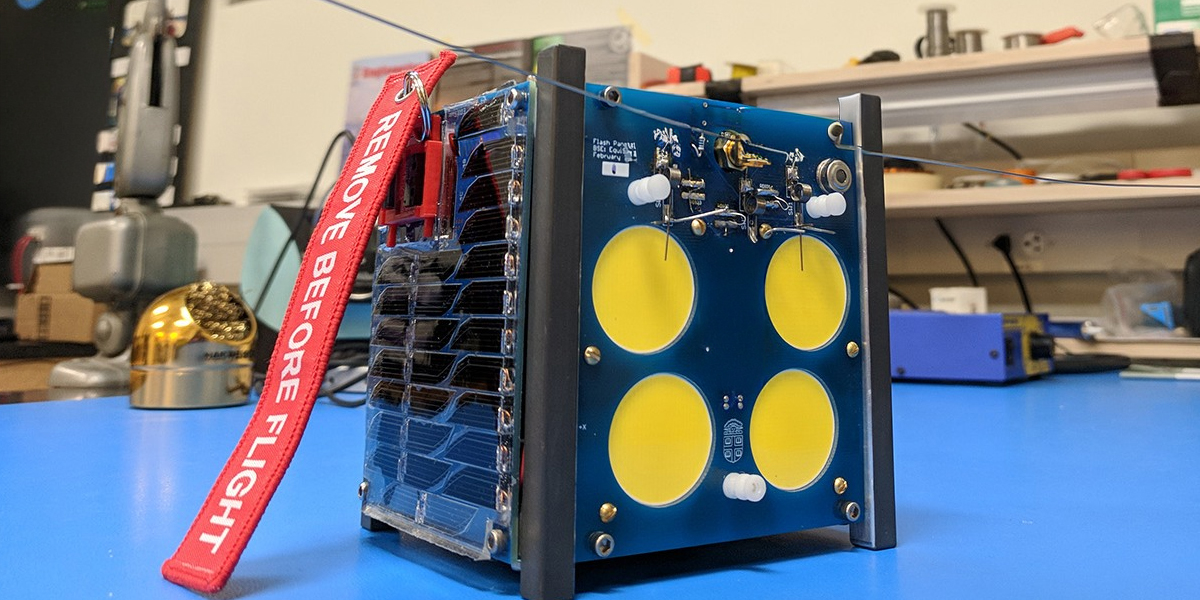
Made in USA Satellites: Why American Manufacturing Matters for Space
The strategic importance of domestic satellite manufacturing and American-made space technology
In an era of global supply chains and international competition, where satellites are manufactured matters more than ever. American-made satellites aren't just about patriotic branding - they represent strategic advantages in supply chain security, technology protection, and national interests.
The Current Landscape
The global satellite manufacturing industry includes major players across the United States, Europe, China, and emerging space nations. While international collaboration has driven space exploration, critical questions arise about dependency, security, and economic opportunity.
The U.S. maintains robust satellite manufacturing capabilities through established aerospace primes and a growing ecosystem of agile commercial manufacturers. However, this sector faces growing competition from international manufacturers offering lower costs through offshore production, particularly from European competitors such as Bulgaria's Endurosat and Latvia's NanoAvionics, which leverage lower labor costs and aggressive pricing strategies to capture market share in the commercial small satellite sector.
Strategic Benefits of Domestic Manufacturing
Manufacturing satellites domestically offers several strategic advantages beyond initial procurement costs. Supply chain security means reduced dependence on foreign suppliers, protection from geopolitical disruptions, and reliable access to components and services. When components travel across fewer international borders, lead times compress from months to weeks, and unexpected trade policy changes cannot suddenly halt production mid-project.
Technology protection ensures intellectual property remains secure within trusted facilities where export control compliance is simplified and sensitive technologies remain protected. For organizations developing proprietary payloads, bus designs, or mission-specific capabilities, domestic manufacturing eliminates the risk that foreign entities might access technical data through normal manufacturing and integration processes.
From a national security perspective, domestic manufacturing supports critical defense capabilities, enables secure government missions, and maintains technological leadership. Defense and intelligence community customers often require facility security clearances, personnel background investigations, and information handling protocols that international manufacturing arrangements cannot accommodate without significant complexity and risk.
The Automotive-Grade Advantage
The domestic automotive manufacturing sector provides a robust component ecosystem for satellites that many space industry participants overlook. The U.S. automotive industry already maintains exceptionally high standards for reliability, environmental tolerance, and quality control - standards developed through billions in R&D investment and validated through millions of vehicle-years of operational data. Tennessee's automotive sector, anchored by Nissan's Smyrna complex, General Motors' Spring Hill facility, and Volkswagen's Chattanooga plant, exemplifies this manufacturing excellence with rigorous quality systems that satellite manufacturers can leverage directly.
Modern automotive electronics must survive temperature extremes from -40°C to +125°C, intense vibration, electromagnetic interference, and fifteen-plus-year operational lifetimes with minimal maintenance. These requirements closely mirror Low Earth Orbit satellite environments where temperature cycling, vibration during launch, and multi-year mission durations demand similar resilience. Automotive power management systems routinely handle voltage transients, load variations, and thermal stresses comparable to spacecraft power systems.
By leveraging automotive-grade components manufactured domestically, satellite builders access proven supply chains with established quality processes, rapid procurement and replacement capabilities, and cost advantages from mass production economies of scale. A microcontroller produced in quantities of 100,000 units per year for automotive applications costs a fraction of a space-qualified equivalent produced in quantities of 1,000 units, yet often provides equivalent or superior reliability for LEO missions.
This approach enables competitive pricing while maintaining domestic sourcing, proving that onshore manufacturing can compete on cost, not just quality. The key is intelligent component selection - using automotive-grade parts where appropriate while reserving true space-qualified components for subsystems facing extreme radiation or thermal environments that exceed automotive specifications.
Economic Impact
Domestic satellite manufacturing creates high-skilled jobs in engineering, manufacturing, testing, and operations. Each satellite engineering position typically supports additional employment in component manufacturing, machine shops, testing facilities, and support services. A mid-sized satellite manufacturer employing fifty direct personnel might generate an additional seventy-five to one hundred jobs throughout its domestic supply network.
Investment in facilities and infrastructure strengthens local manufacturing ecosystems. When satellite manufacturers establish operations, they drive demand for precision machining, electronic assembly, testing services, and logistics capabilities that serve multiple industries. This creates resilient regional economies less vulnerable to single-industry downturns.
Research and development activities at satellite manufacturers often produce innovations with applications far beyond aerospace. Thermal management techniques, power systems design, communications protocols, and software architectures developed for satellites frequently transfer to terrestrial applications, multiplying the return on investment throughout the economy.
Supply Chain Resilience
Recent global events from 2020-2023 have dramatically highlighted supply chain vulnerabilities that theoretical planning exercises never fully captured. The semiconductor shortage demonstrated how quickly supply chains optimized for cost efficiency can collapse when faced with unexpected demand shifts or production disruptions. Satellite manufacturers dependent on international component suppliers faced delays measured in quarters rather than weeks, with some projects extending timelines by twelve to eighteen months.
Manufacturing satellites domestically provides resilience against international disruptions, protection against abrupt foreign policy changes that can restrict access to critical components, faster response to changing requirements when engineering teams work directly with nearby suppliers, and direct communication with suppliers that accelerates problem-solving when design iterations are needed.
When components come from regional automotive suppliers rather than overseas manufacturers, procurement cycles compress dramatically. A component requiring a twelve-week lead time from an international supplier might be available in three weeks from a domestic source. When problems arise - a tolerance issue, an unexpected failure mode, or a design optimization opportunity - the ability to drive to a supplier's facility and work through solutions with their engineering team in real-time accelerates development in ways that email exchanges across time zones cannot match.
Geographic proximity also enables just-in-time manufacturing, reducing inventory costs and working capital requirements. Rather than ordering six months of components to buffer against shipping delays and customs uncertainties, domestic manufacturers can maintain leaner inventories with more frequent replenishment cycles.
Regulatory Advantages
Domestic manufacturing simplifies complex regulatory requirements that can add substantial cost and schedule burden to international manufacturing arrangements. The International Traffic in Arms Regulations (ITAR) and the Export Administration Regulations (EAR) govern the export of satellite technologies and technical data across international borders. These regulations don't merely add paperwork - they fundamentally constrain how engineering teams collaborate, what information can be shared with whom, and how quickly technical problems can be resolved.
ITAR compliance becomes straightforward when manufacturing stays within domestic borders. Technical discussions between engineers don't require export license applications. Design documentation flows freely between internal teams. When a supplier needs technical drawings to manufacture a component, that transfer doesn't constitute a "deemed export" requiring State Department approval.
Export control complexity extends to personnel as well. Foreign nationals working on satellite projects, even as employees of domestic companies, face access restrictions that complicate team structures and knowledge sharing. Security clearances for personnel are simplified when facilities operate under domestic jurisdiction rather than requiring complex international security arrangements.
Government customer requirements often mandate facility security measures, information handling protocols, and personnel screening that international manufacturing partnerships cannot easily accommodate. Defense and intelligence missions may require Special Access Program facilities, TEMPEST-certified workspaces, or isolated network environments that exist only within secured domestic facilities.
These regulatory advantages reduce compliance costs that can represent 10 to 20 percent of program budgets for internationally structured projects and accelerate project timelines by eliminating months of licensing delays when time-sensitive mission requirements demand rapid development and deployment.
Quality and Standards
Aerospace quality management systems like AS9100 represent a baseline rather than a ceiling for manufacturing excellence. While many manufacturers display these certifications, implementation rigor varies dramatically. Domestic facilities operating under established regulatory oversight and customer accountability tend toward more robust quality cultures than offshore facilities, where audits occur less frequently and customer visibility remains limited.
AS9100 aerospace quality management standards require documented processes, traceability, and continuous improvement mechanisms. ISO certifications ensure process consistency across manufacturing operations. Rigorous testing protocols validate performance before hardware reaches orbit, where repairs prove impossible, and failures can mean complete mission loss.
However, certifications alone don't guarantee quality. The distinction lies in whether quality management represents a compliance exercise or an engineering culture. Organizations that integrate quality into design reviews, use statistical process control to identify trends before they become problems, and maintain deep relationships with suppliers, enabling root-cause analysis when anomalies occur, produce more reliable spacecraft than those treating quality as a documentation burden.
Domestic manufacturers operating in mature aerospace ecosystems benefit from decades of lessons learned, established test facilities, and engineering communities that share knowledge across companies and programs. This collective expertise- embodied in local suppliers who understand spacecraft requirements, testing labs familiar with space qualification protocols, and engineering talent trained in aerospace-specific disciplines- represents an often-undervalued advantage of manufacturing within established aerospace regions.
The Nashville Advantage
Cities like Nashville demonstrate why domestic satellite manufacturing makes strategic sense from both operational and economic perspectives. The region's central U.S. location provides logistics advantages with efficient access to both coasts and major transportation hubs, reducing shipping times and costs compared to coastal facilities (See: Blackwing Space and the Rise of a Southern Space Corridor).
Nashville's advanced manufacturing ecosystem supports diverse industries from automotive to healthcare devices, creating a supplier network with precision machining, electronic assembly, and testing capabilities that satellite manufacturers can leverage. This diversity means suppliers don't depend solely on aerospace customers and maintain capabilities through economic cycles.
The region's automotive supply chains, particularly those supporting Nissan's Smyrna assembly plant and GM's Spring Hill facility, offer proven components and established quality systems that satellite manufacturers can access locally. When a satellite needs precision-machined aluminum structures, automotive machining suppliers can often provide equivalent quality at lower cost than space-specific vendors.
The skilled workforce combines mechanical engineers from automotive backgrounds, electrical engineers from the region's growing tech sector, and aerospace engineers attracted by the lower cost of living compared to traditional aerospace hubs. This multidisciplinary talent pool enables satellite manufacturers to build teams with diverse perspectives and avoid the groupthink that sometimes emerges in single-industry regions.
Lower operating costs - commercial real estate at one-third to one-half the cost of coastal aerospace centers, competitive salaries that attract strong talent while maintaining manageable burn rates- enable competitive pricing that challenges the assumption that domestic manufacturing necessarily means premium pricing.
Supporting Innovation Ecosystems
Domestic satellite manufacturing enables startups and innovators to compete globally without the overhead of managing international supply chains. Entrepreneurs can source components through established domestic channels, prototype rapidly with local machine shops and electronics manufacturers, and iterate designs based on direct feedback from suppliers who understand their requirements.
Universities can partner with nearby manufacturers to provide students with hands-on experience in spacecraft development, creating workforce pipelines that benefit both educational institutions and industry. Vanderbilt University's aerospace program, for example, can collaborate with Nashville-area satellite manufacturers to offer students project opportunities that transcend classroom theory.
Research institutions can rapidly prototype and test new technologies when local manufacturing capabilities are available. A new attitude control algorithm, an innovative power system architecture, or a novel communications protocol can move from concept to flight hardware in months rather than years when manufacturing partners operate in the same time zone and can accommodate rapid iteration cycles.
Small businesses can enter space markets without offshore dependencies that require export licenses, international legal arrangements, and complex logistics. A component supplier in Tennessee can provide products to satellite manufacturers without navigating ITAR complications that would arise if that manufacturer operated international facilities or partnered with foreign entities.
Environmental Considerations
Manufacturing satellites domestically often means operating under environmental standards stricter than those of some offshore alternatives. U.S. facilities must comply with EPA regulations governing emissions, waste disposal, and chemical handling. Responsible waste management requires tracking and proper disposal of hazardous materials used in electronics manufacturing and surface treatment processes. Energy efficiency standards and building codes encourage sustainable facility operations.
While environmental compliance adds operational costs- waste disposal, permitting, monitoring equipment, and compliance personnel represent meaningful budget items- these requirements align with growing emphasis on sustainable space operations. As the space industry confronts orbital debris challenges and environmental impacts of launch operations, manufacturers demonstrating ecological responsibility throughout the supply chain may find competitive advantages with customers prioritizing sustainability.
The transparency of domestic environmental oversight also provides customers with confidence that manufacturing practices align with their own corporate responsibility goals. International manufacturing arrangements sometimes obscure environmental practices within complex supply chains where visibility and accountability prove more challenging to maintain.
The Competitive Challenge
Domestic manufacturers face real competition from international providers offering lower labor costs, particularly from Eastern European manufacturers, where engineering salaries may be forty to sixty percent below U.S. levels. However, smart strategies can maintain competitiveness beyond competing solely on initial sticker price.
Leveraging domestic mass-production industries, such as the automotive industry, provides component cost advantages that offset labor rate differences. Automating manufacturing processes through modern assembly techniques, automated testing systems, and software-driven production reduces labor content in final products. Focusing on rapid delivery and flexibility allows domestic manufacturers to serve customers requiring fast-turnaround missions or iterative development approaches that slower international supply chains cannot accommodate.
Emphasizing total value beyond initial cost means educating customers about supply chain risks, regulatory complexity costs, and long-term support considerations that affect total program costs. Building integrated service offerings that combine satellite platforms with launch coordination, mission operations, and data processing creates value propositions that transcend hardware pricing alone.
Success requires competing on total value- delivery speed, supply chain reliability, regulatory simplicity, technical support quality, and adaptation to changing requirements- not just initial procurement cost. Organizations making satellite sourcing decisions based solely on the lowest bid pricing often discover that hidden costs and schedule delays eliminate apparent savings.
Policy Support
Government policies can amplify domestic satellite manufacturing advantages through several mechanisms. Procurement preferences for domestically-produced products, already established through programs like NASA's CSLI (CubeSat Launch Initiative) and defense acquisition regulations, can extend further into commercial procurement decisions.
R&D funding for advanced manufacturing techniques- automated assembly, in-space manufacturing, and novel materials processing- can help domestic manufacturers maintain technological leadership that justifies premium positioning. Workforce development programs linking community colleges with aerospace employers can create talent pipelines addressing the industry's most critical constraint: skilled technical personnel.
Infrastructure investment in testing facilities, environmental test chambers, and launch integration capabilities that serve multiple manufacturers can reduce barriers to entry for new domestic manufacturers. Trade policies protecting critical industries from predatory pricing or state-subsidized competition ensure market conditions that enable private investment in domestic manufacturing capabilities.
The Path Forward
Domestic satellite manufacturing has a clear path to growth if industry and policy align effectively. Expanding commercial satellite markets- from constellation operators to government customers, diversifying supplier bases- create opportunities for domestic manufacturers to capture market share through superior service and reliability.
Leveraging emerging technologies like additive manufacturing, AI-driven testing and quality control, and advanced materials can create technical differentiation that justifies domestic production. Developing strategic partnerships among satellite manufacturers, component suppliers, launch providers, and service operators can create integrated value chains that are more efficient than fragmented international arrangements.
Creating new business models that emphasize satellite-as-a-service, rapid refresh cycles, and responsive space capabilities can shift competitive dynamics away from pure hardware cost toward operational value, where domestic manufacturing advantages become more apparent.
Making the Choice
Organizations selecting satellite manufacturers should evaluate proposals holistically rather than focusing exclusively on initial hardware costs. Supply chain reliability affects not just delivery schedules but total program risk profiles. Regulatory compliance complexity impacts both direct costs and engineering productivity. Technology protection considerations matter especially for missions involving proprietary payloads or novel capabilities.
Rapid iteration capability becomes critical for missions with evolving requirements or for development programs that expect multiple design cycles. Support for domestic innovation ecosystems creates spillover benefits when manufacturers contribute to regional aerospace development beyond individual programs.
For many missions- particularly government customers, organizations developing proprietary technologies, time-sensitive deployments, and programs requiring regulatory simplicity- domestically manufactured satellites offer the best combination of performance, reliability, and strategic value. The calculus extends beyond procurement economics to encompass mission success probability, schedule confidence, and long-term operational flexibility that initial cost comparisons often fail to capture.

Related Articles