OpenLST: Battle-Tested Space Communications for Everyone
How Planet Labs' proven UHF radio design with 200+ satellites and centuries of on-orbit validation became the gold standard for affordable space communications
When Planet Labs open-sourced their proven satellite radio design in 2018, they didn't just release another hardware project - they shared a flight heritage measured in centuries of cumulative on-orbit operation. For the growing NewSpace ecosystem, OpenLST represents something rare: a genuinely democratized path to reliable space communications.
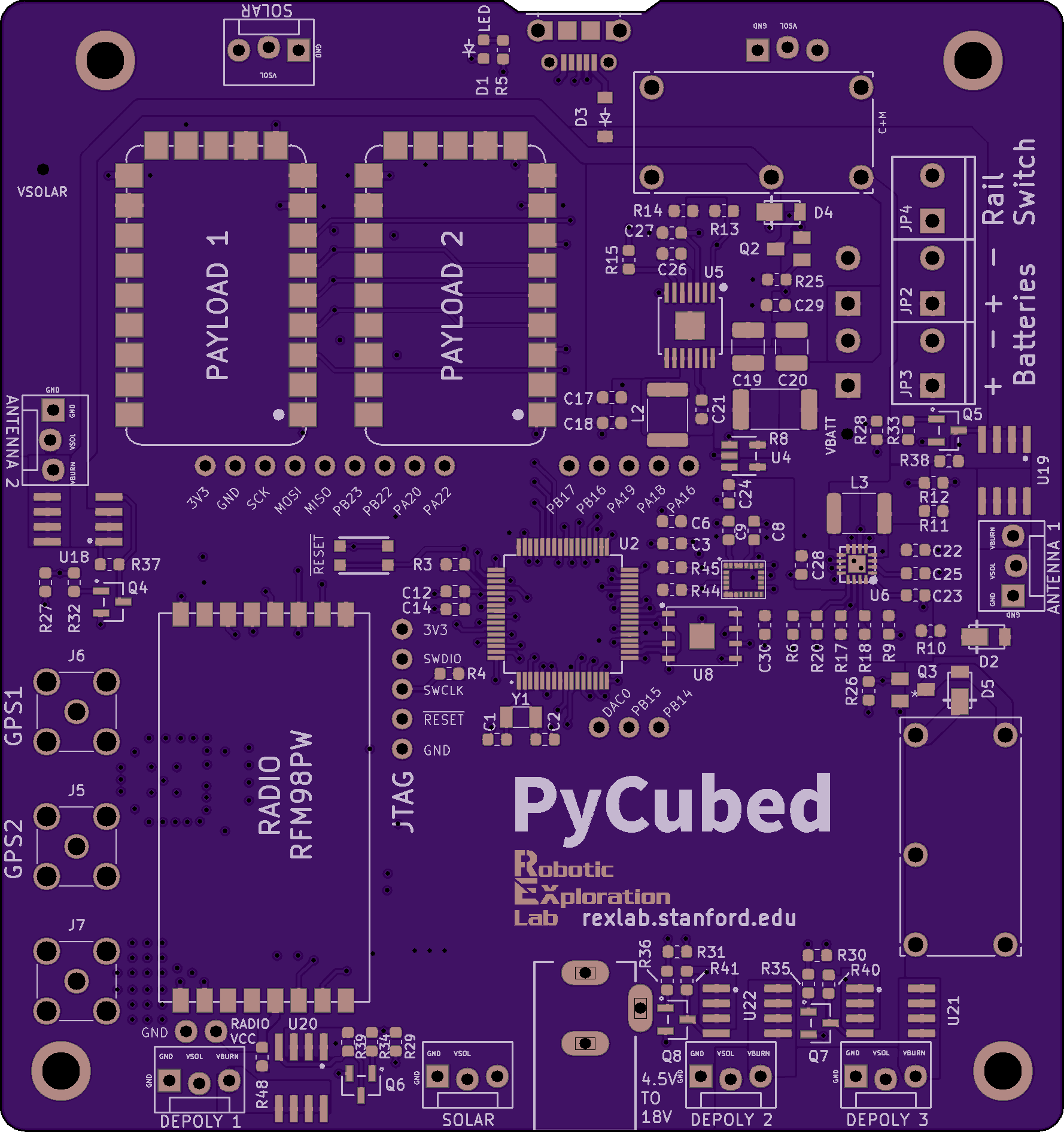
At Blackwing Space, our current nanosatellite architecture uses radio implementations based on extensions to the PyCubed onboard computer. However, we're deeply committed to celebrating open-source innovation and fostering an ecosystem where both open-source projects and commercial partners can build solutions for our platform. This commitment extends beyond our own technology stack - we actively examine and highlight exceptional projects like OpenLST that exemplify the collaborative spirit driving NewSpace forward.
OpenLST deserves attention not because it's part of our current subsystem lineup, but because it demonstrates a principle central to our industry's future: proven, battle-tested space technology can be both affordable and openly available. For teams building on Blackwing platforms or developing their own satellite systems, understanding projects like OpenLST illuminates what's possible when the space community shares knowledge freely.
From Dove Constellation to Open Source
Planet Labs (now Planet) developed the Low-Speed Transceiver (LST) for their revolutionary Dove satellite constellation. The numbers tell a compelling story: over 200 satellites, hundreds of cumulative years of on-orbit operation, and a 100% contact success rate with successfully deployed spacecraft. This isn't theoretical engineering - it's proven performance where failure isn't an option.
Communications subsystems contribute to at least 29% of CubeSat failures within the first 90 days on-orbit. As Planet's Bryan Klofas explained at the project's release, "Radio system design is often viewed as a 'black box' that is out of reach to all but the most experienced of engineers."
Technical Specifications: Small Package, Proven Performance
OpenLST delivers impressive capabilities in a compact form factor:
Physical Characteristics
- Dimensions: 6cm x 5cm
- Mass: 20 grams
- Component cost: Less than $50
Communications Performance
- Frequency: UHF band (437 MHz)
- Data Rate: 3.5 kbps user data
- Transceiver: TI CC1110
- Features: FEC, CRC, ranging
Design Philosophy
- Commercial off-the-shelf parts
- Proven reliability through design
- Fraction of traditional costs
- 200+ satellite flight heritage
The radio uses commercially available, off-the-shelf components rather than expensive space-qualified parts. This approach, combined with robust design and extensive flight heritage, delivers reliability at a fraction of the cost of traditional approaches.
What's Included
The OpenLST project provides everything needed for implementation:
- Hardware Design - Complete PCB schematics and layout utilizing the Texas Instruments CC1110 transceiver (available on OSH Park)
- Firmware - Production-ready bootloader and radio application source code targeting the 70cm amateur band
- Ground Station Tools - Python-based testing and operations software for interfacing with the radio
- Documentation - Comprehensive user's guide covering programming, customization, and deployment
- Community Extensions - Including GNU Radio blocks for integration with SDR workflows
Licensing and Compliance
The project embraces open-source principles while respecting regulatory requirements:
- Hardware: Creative Commons Attribution Share-Alike 4.0 (CC-BY-SA 4.0)
- Software: GNU General Public License v3.0 (GPL-3.0)
- Export Control: Subject to U.S. Export Administration Regulations (EAR)
It's worth noting that due to export control regulations, Planet employees cannot provide technical support for external implementations. However, the open-source community has proven remarkably capable of filling this gap.
Real-World Applications
OpenLST's proven reliability makes it suitable for diverse applications beyond traditional satellites:
Space Systems
- CubeSats and nanosatellites
- University research missions
- Amateur radio satellites
- Formation-flying constellations
Terrestrial Applications
- High-altitude balloons
- Remote sensing platforms
- Drone communications
- Distributed sensor networks
Experimental Use
- Amateur radio experimentation
- Educational projects
- Proof-of-concept development
- Wireless protocol research
Community Evolution
While the original OpenLST repository hasn't seen updates in seven years, the open-source community has kept the project alive through numerous forks and adaptations. Organizations like the Harvard Satellite Club and university teams worldwide have built upon the foundation, creating customized implementations for their specific missions.
The main repository serves as the reference design, with community members sharing experiences, modifications, and solutions through GitHub issues and discussions. This distributed development model means improvements and lessons learned propagate across the entire community.
Getting Started
For teams considering OpenLST:
- Review the Documentation - Start with the user's guide to understand capabilities and requirements
- Order Boards - Pre-designed boards are available through OSH Park, eliminating manufacturing complexity
- Understand Licensing - Amateur radio projects can use the 435-438 MHz satellite allocation; commercial applications require appropriate frequency coordination
- Join the Community - Multiple forks and implementations exist; learning from others' experiences accelerates development
- Consider Modifications - The open-source license encourages customization for specific mission needs
The Bigger Picture
OpenLST represents more than just a radio design - it's a blueprint for how the space industry can democratize access to proven technology. Planet's decision to release this design, despite its competitive value, exemplifies the collaborative spirit driving NewSpace forward.
For emerging space companies, university programs, and amateur radio satellites, OpenLST removes one of the highest-risk, highest-cost barriers to entry. The difference between a $50 radio with hundreds of years of on-orbit validation and a $5,000+ commercial alternative can determine whether a mission even happens.
As Blackwing Space works to make enterprise-grade nanosatellites accessible to more organizations, we recognize that the ecosystem succeeds when proven technology flows freely. OpenLST demonstrates that battle-tested space systems can be both affordable and openly available - a principle that should guide the industry's future.
Technical Resources
Primary Resources
- Main Repository: github.com/OpenLST/openlst
- PCB Design: OSH Park Shared Project
- GNU Radio Integration: gr-openlst
Community Forks
- Modified implementations and additional resources available through GitHub
Documentation
- Planet Labs' original announcement and technical presentations
- User guides and integration documentation in the repository
- Amateur radio frequency coordination through IARU

Related Articles