Commercial CubeSat Platforms by Mission Type: Earth Observation, Comms, IoT, and Tech Demo
The right bus depends on what your payload is trying to do. Here's how platform requirements differ across the four most common commercial mission types.
Most commercial CubeSat missions fall into one of four categories: Earth observation, communications relay, Internet of Things data collection, and technology demonstration. Each category places very different demands on the underlying platform, which means the question "what is the best commercial CubeSat platform" has no single answer. The better question is which platform specifications matter most for your specific mission type, because a bus optimized for one category is often poorly matched to another.
Earth Observation: Pointing Accuracy and Downlink Dominate
Imaging and remote sensing payloads need two things above everything else: precise, stable pointing to hold a ground target steady during a pass, and enough downlink capacity to return the data volume a camera or sensor generates. Sub-degree pointing accuracy, often requiring a star tracker and reaction wheels rather than simpler magnetic torquers alone, is typically non-negotiable for any imaging mission beyond the lowest resolution tiers. Downlink is the second constraint: a single multispectral image can run into hundreds of megabytes, which a 9.6 kbps UHF link cannot return in a reasonable number of passes. Earth observation buyers tend to do well prioritizing platforms that offer S-band or X-band downlink options and treating ADCS tier as a primary selection criterion rather than a secondary one.
Communications Relay: Power and Duty Cycle Over Pointing
A comms relay or store-and-forward payload typically cares less about precise pointing and more about power availability and radio duty cycle. These payloads often transmit and receive on a near-continuous basis, which drives a different power budget profile than an imaging payload that activates briefly during a pass. Buyers in this category usually get the most from focusing comparison on orbit-average power generation and battery capacity for eclipse periods, and on whether the bus can support the specific radio frequency and power level the payload requires without exceeding thermal or power limits.
IoT Data Collection: Simplicity and Coverage Over Precision
Satellite IoT payloads, collecting telemetry from ground sensors and relaying it to a cloud application, generally need the least demanding platform of the four categories. Pointing accuracy requirements are loose, since the payload is usually an omnidirectional antenna rather than a directional sensor. The platform selection question shifts toward constellation economics: how many satellites are needed for the coverage and revisit time the service requires, which makes cost per unit and manufacturing lead time more important selection criteria than any single spec number. This is the category where a genuinely standard, low-cost platform is usually the right fit rather than a liability.
Technology Demonstration: Flexibility Over Everything
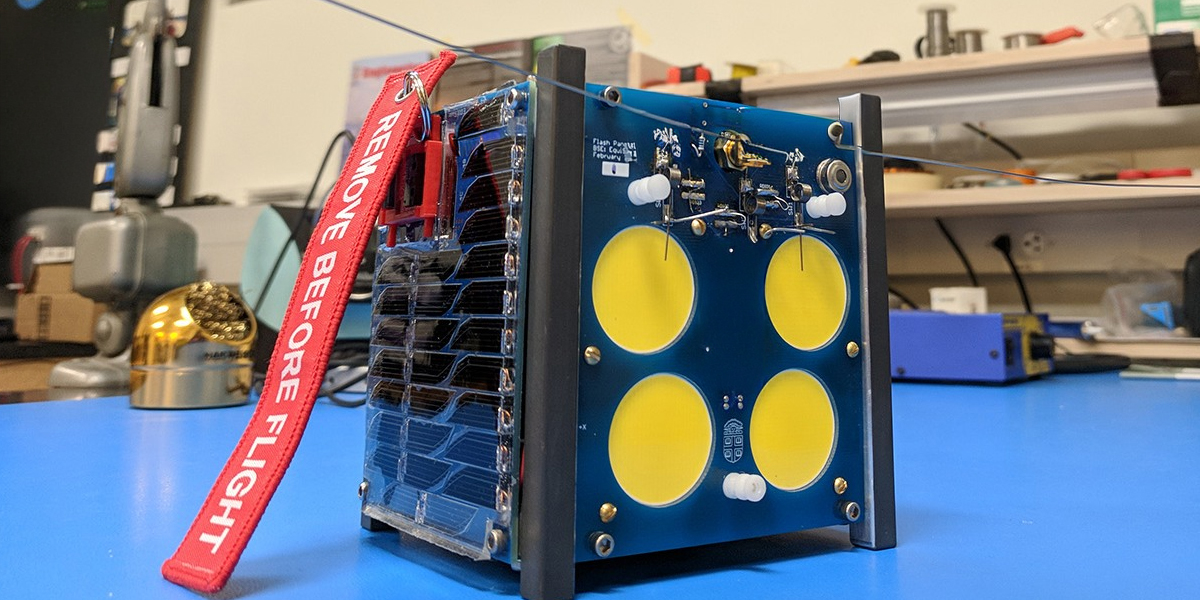
Tech demo missions, proving a new payload, instrument, or subsystem works in orbit, benefit from a platform with margin and flexibility rather than optimization in any single dimension. Blackwing Space's Baby Bird mission is itself a useful reference case here: a single Sparrow 1.5U bus carried three unrelated commercial payloads (an optical beacon, memorial capsules, and a radiation-shielding material sample) as a proof-of-concept demonstrating the platform's integration flexibility, not as a specialized imaging or comms mission. For a buyer whose primary goal is proving a payload or technology in orbit rather than delivering an operational service, a flexible configurable-tier platform with generous power and volume margin is usually a better fit than a platform optimized narrowly for one mission type.
Matching the Platform to the Mission, Not the Other Way Around
The practical implication for buyers is that identifying the mission type before requesting quotes, and weighting platform comparison criteria accordingly, makes the comparison far more useful. An Earth observation buyer evaluating platforms primarily on cost per unit, without weighting pointing accuracy and downlink heavily, will likely end up with a platform that cannot deliver usable imagery. An IoT buyer over-specifying pointing accuracy and downlink capacity they do not need will pay for capability that never gets used. Naming your mission type explicitly when requesting quotes, and asking vendors how their standard platform performs against the two or three specs that matter most for that category, produces far more useful comparisons than a generic request for "a commercial CubeSat platform."
Missions That Blend Categories
Some commercial missions genuinely combine two categories, such as an IoT relay payload flying alongside a secondary tech demonstration instrument, and these hybrid cases are exactly where the configurable platform tier discussed elsewhere tends to be the right fit rather than a platform purpose-built for either category alone. A practical test works the same regardless of how many categories a mission touches: listing the two or three requirements that would cause the mission to fail if the platform could not meet them, and scoring every vendor quote against those specific requirements first, before price, brand recognition, or any other factor enters the decision.

Related Articles