Tennessee's First Commercial Satellite. Built in Five Months.
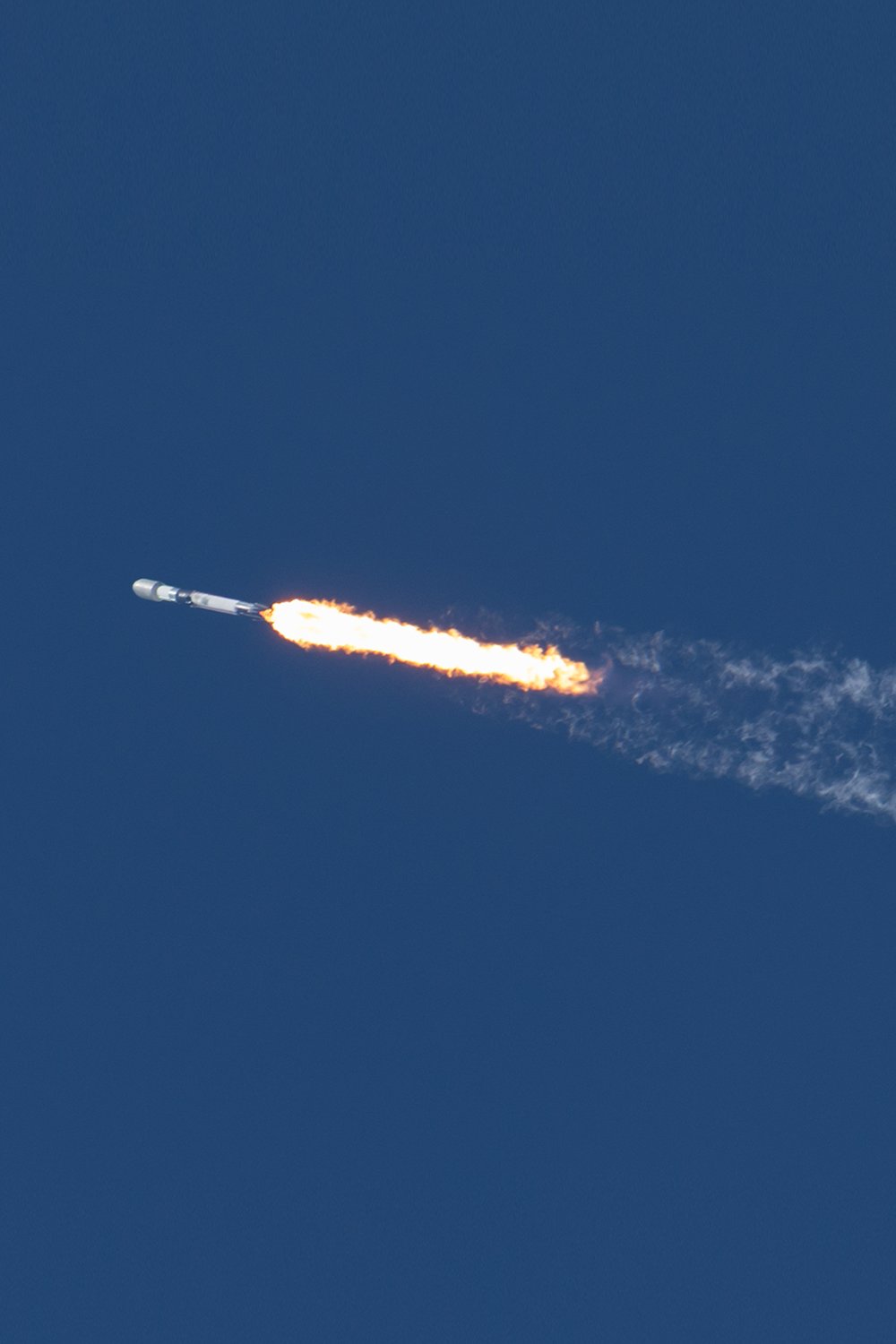
Blackwing Space was only ten months old when Baby Bird launched aboard SpaceX Transporter-18 on October 1, 2026. The Tennessee-built satellite carried three commercial payloads into orbit on the first flight of Blackwing's Sparrow platform.
Mission Overview
Baby Bird proved that Blackwing Space can take a satellite from a blank page to orbit in only five months, and gave the Sparrow platform, Rook flight computer, and mission operations team their first flight heritage.
Five-month build:
Contract signed March 14, spacecraft in its flight dispenser August 19.
First Sparrow flight:
Platform, structure, power, and UHF radio flown for the first time.
Rook flight computer:
Blackwing's in-house flight computer earned its flight heritage.
Tennessee's First Commercial Satellite:
Designed and built in Tennessee by the Blackwing Space team.
Three paying customers:
Optical beacons, memorial capsules, and radiation shielding.
Same-day contact:
Beacons and telemetry received from orbit on launch day, October 1.
Mission Gallery
A look at Baby Bird's five-month build in Tennessee, from the first hardware on the bench to the final checks before launch. See the Photo Gallery
Mission Customers
Three commercial customers trusted Blackwing Space's first spacecraft with their payloads.

Flew 56 capsules of cremated remains and DNA samples as part of the Celestis Endeavor Flight Manifest — the latest in Celestis's long-running series of memorial spaceflight missions.
Mission Timeline
Commercial sales agreement signed with Manifest Space and the Baby Bird build began.
The Blackwing Rook flight computer booted end to end for the first time.
Celestis capsules delivered and integrated in the Brentwood, Tennessee cleanroom.
The Manifest Space team joined Blackwing in the cleanroom to integrate the optical beacon payload into the flight spacecraft.
The integrated flight article completed its launch-environment vibration test campaign on all three axes and powered on as designed after test.
FCC experimental license granted for Baby Bird (call sign WB9XWX).
Baby Bird completed thermal cycling and functional checks at the Element test facility in Melbourne, Florida.
Final checkouts passed and Baby Bird was integrated into its SEOPS flight dispenser, five months after contract signature.
Launched aboard SpaceX Transporter-18 from Vandenberg Space Force Base and deployed into low Earth orbit.
First beacons and telemetry received from orbit on launch day, confirming a healthy spacecraft.
Baby Bird continues to operate in orbit, flying the Manifest Space optical beacon and supporting its other onboard payloads.
Mission Facts
Blackwing Space Sparrow 1.5U nanosatellite with the Rook flight computer and a UHF radio.
SpaceX Falcon 9, Transporter-18 rideshare, Vandenberg SLC-4E. Deployed from a SEOPS dispenser.
Sun-synchronous low Earth orbit at about 520 km, 97.4° inclination. NORAD ID 100893 (2026-227L).
Live Tracker
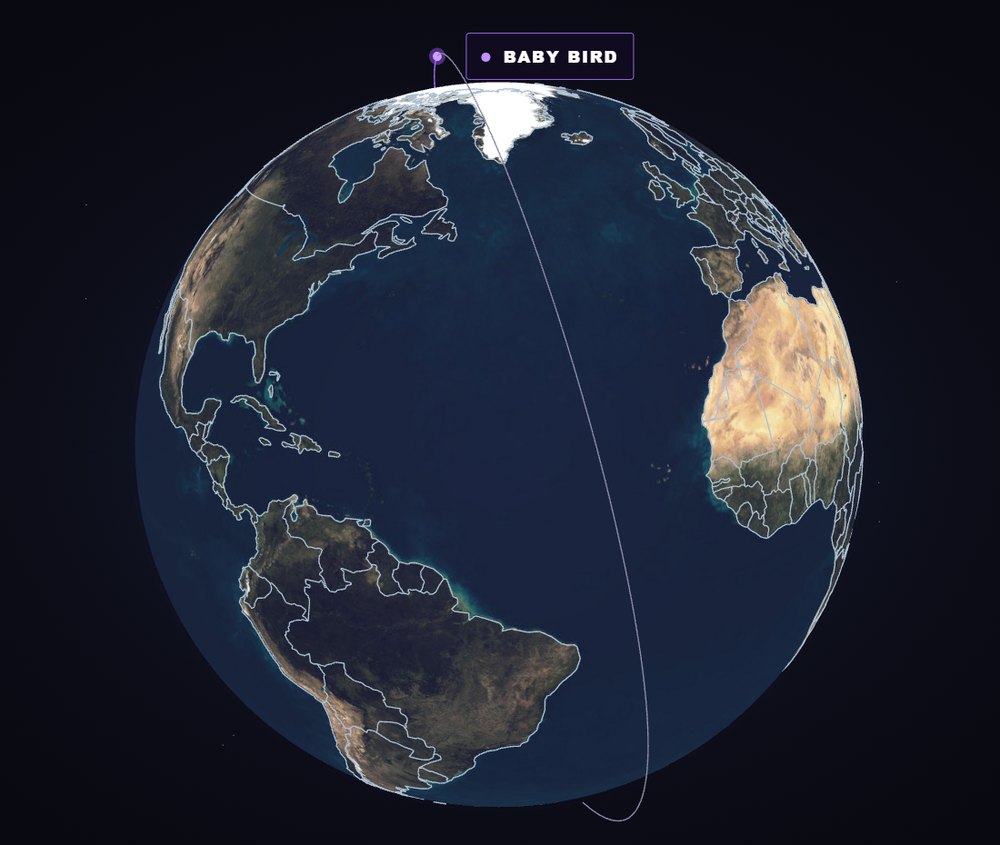
See where Baby Bird is right now, follow its orbit path on a 3D globe, and check when it passes overhead.
Open the trackerMission Videos
Launch: SpaceX Transporter-18, October 1, 2026
Separation: Baby Bird deploys into orbit
Resources
“Seeing Baby Bird move from integration to flight readiness is a great example of how strong partnerships across the space industry can accelerate the journey from an idea on the ground to a mission in orbit.”
Sabrina Kearney, VP of Mission Management and Integration, SEOPS
Orbital Elements
The latest public orbital elements for Baby Bird, loaded from CelesTrak through the Blackwing tracker and refreshed automatically while this page is open.
Loading latest orbital elements…
Follow Baby Bird
Follow Baby Bird's predicted position around the globe on the live satellite tracker, or talk to the team about flying your payload on an upcoming Blackwing Space mission.