What is a CubeSat? A Complete Guide to Nanosatellite Technology
Everything you need to know about CubeSats and why they're revolutionizing space access
CubeSats have transformed the space industry over the past two decades, making satellite technology accessible to universities, startups, and organizations that could never afford traditional spacecraft. But what exactly is a CubeSat, and why has this technology become so important?
CubeSat Definition and Standards
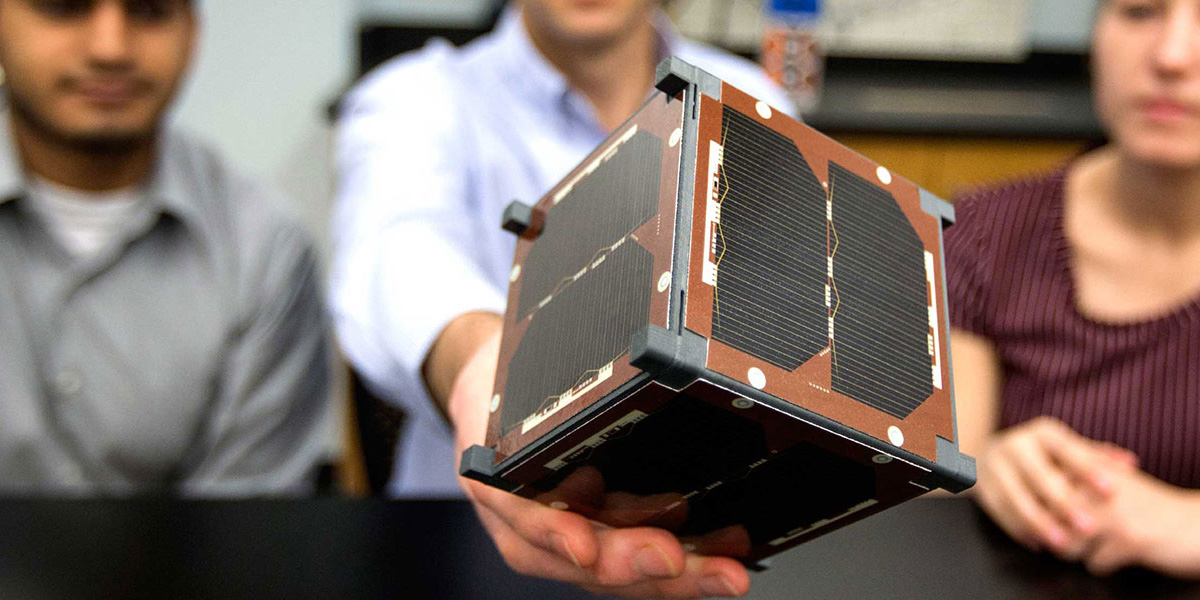
A CubeSat is a type of nanosatellite built to standardized dimensions. The basic unit, called "1U" (one unit), measures 10 x 10 x 10 centimeters and weighs no more than 1.33 kilograms. This cubic form factor gives CubeSats their name.
The CubeSat standard was developed in 1999 by professors Jordi Puig-Suari at California Polytechnic State University and Bob Twiggs at Stanford University. Their goal was to provide students with hands-on experience building and operating real satellites in space.
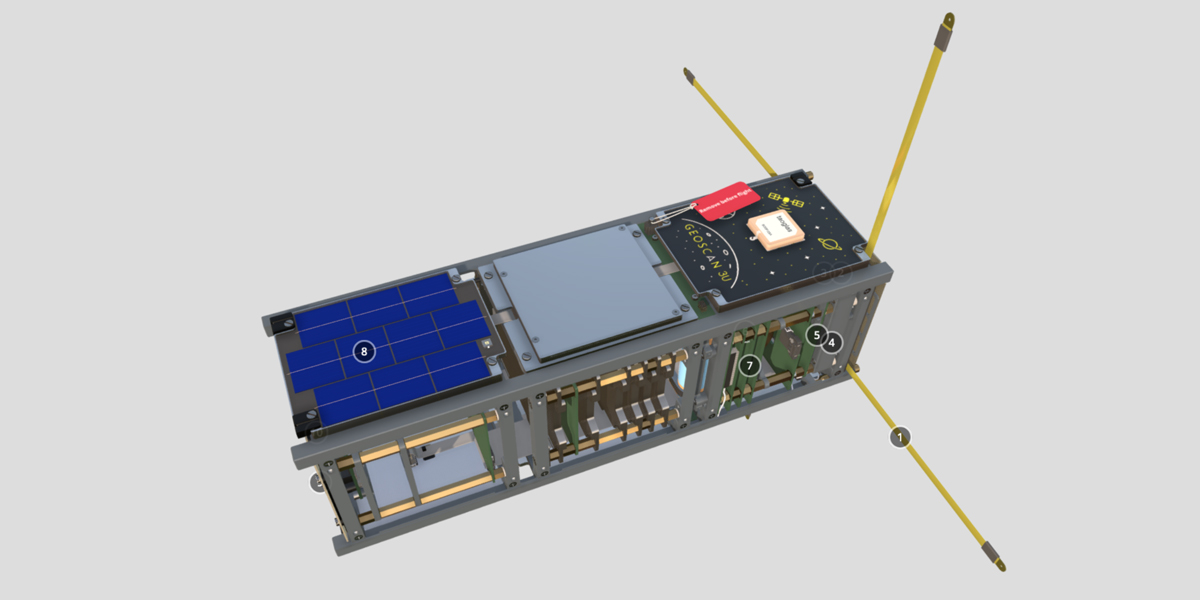
CubeSats can be combined to create larger platforms. Common configurations include 3U (three units stacked), 6U (six units), and 12U (twelve units). Each size increase provides more volume for payloads, batteries, and advanced systems while maintaining the standardized form factor.
How CubeSats Work
Despite their small size, CubeSats contain all the essential systems of larger satellites. A typical CubeSat includes an onboard computer for command and control, communication systems for ground contact, power systems with solar panels and batteries, attitude determination and control for orientation, and payload space for mission-specific instruments.
Modern CubeSats leverage the same miniaturization that powers smartphones and laptops. Components that once required large satellites can now fit in a 10-centimeter cube, enabling sophisticated missions at a fraction of traditional costs.
CubeSat Applications
What started as an educational tool has evolved into a commercial and scientific platform supporting diverse missions. Earth observation CubeSats provide imagery for agriculture, disaster response, and environmental monitoring. Communications CubeSats enable IoT connectivity and data relay services. Scientific research CubeSats study space weather, test new technologies, and conduct experiments. Technology demonstrations validate new components and systems before deployment on larger spacecraft.
The Economics of CubeSats
Traditional satellites can cost tens or hundreds of millions of dollars. CubeSats typically cost between $10,000 and $500,000 depending on size and complexity. This dramatic cost reduction opens space to organizations that could never participate before.
Launch costs have also decreased significantly. CubeSats can rideshare on larger rocket launches, splitting costs among multiple customers. A 3U CubeSat launch might cost $100,000-$300,000 compared to millions for dedicated launches of traditional satellites.
CubeSat Deployment
CubeSats launch inside standardized deployers that protect them during ascent and release them once in orbit. Common deployers include the Poly-Picosatellite Orbital Deployer (P-POD), NanoRacks CubeSat Deployer on the International Space Station, and various commercial deployers from launch service providers.
The deployment mechanism uses a spring-loaded system to gently push CubeSats into orbit at safe separation velocities, ensuring they don't collide with the launch vehicle or other satellites.
Technical Capabilities
Modern CubeSats achieve impressive capabilities despite size constraints. High-resolution cameras capture Earth imagery at resolutions down to 3-5 meters per pixel. Advanced communication systems support S-band, X-band, and even optical links. Onboard processing enables AI and machine learning at the edge. Propulsion systems allow orbit changes and formation flying.
Challenges and Limitations
CubeSats face unique challenges due to their small size. Limited power generation from small solar panels constrains operations. Reduced volume limits battery capacity and payload size. Miniaturized components may have shorter lifespans than space-grade alternatives. Communication bandwidth is often limited compared to larger satellites.
However, the industry continues addressing these challenges through better components, innovative designs, and operational strategies like satellite constellations.
The Future of CubeSats
The CubeSat market is experiencing explosive growth. Industry analysts project the nanosatellite market will reach $8-16 billion by the early 2030s, driven by commercial applications and continued miniaturization.
Emerging trends include larger CubeSat formats (12U, 16U, and beyond), advanced propulsion for orbit changes, inter-satellite links for constellation communication, and manufacturing in space using CubeSat-class platforms.
Getting Started with CubeSats
Organizations interested in CubeSat missions should start by defining clear mission objectives and requirements, researching available components and platforms, engaging with experienced manufacturers and integrators, and planning for licensing, launch, and operations.
Commercial platforms like Blackwing Space offer turnkey CubeSat solutions, making it easier than ever to deploy a mission without building everything from scratch.
Conclusion
CubeSats have democratized access to space, enabling innovation from universities, startups, and organizations worldwide. As technology continues advancing and costs keep falling, these small satellites will play an increasingly important role in Earth observation, communications, scientific research, and commercial space services.
Whether you're a student, researcher, entrepreneur, or organization exploring space applications, CubeSats offer an accessible and affordable path to orbit.

Related Articles