Nanosatellite Manufacturers for Hire: How to Find a Company That Builds Small Satellites
A search framework for finding and vetting a nanosatellite manufacturer, for buyers who use that term instead of CubeSat.
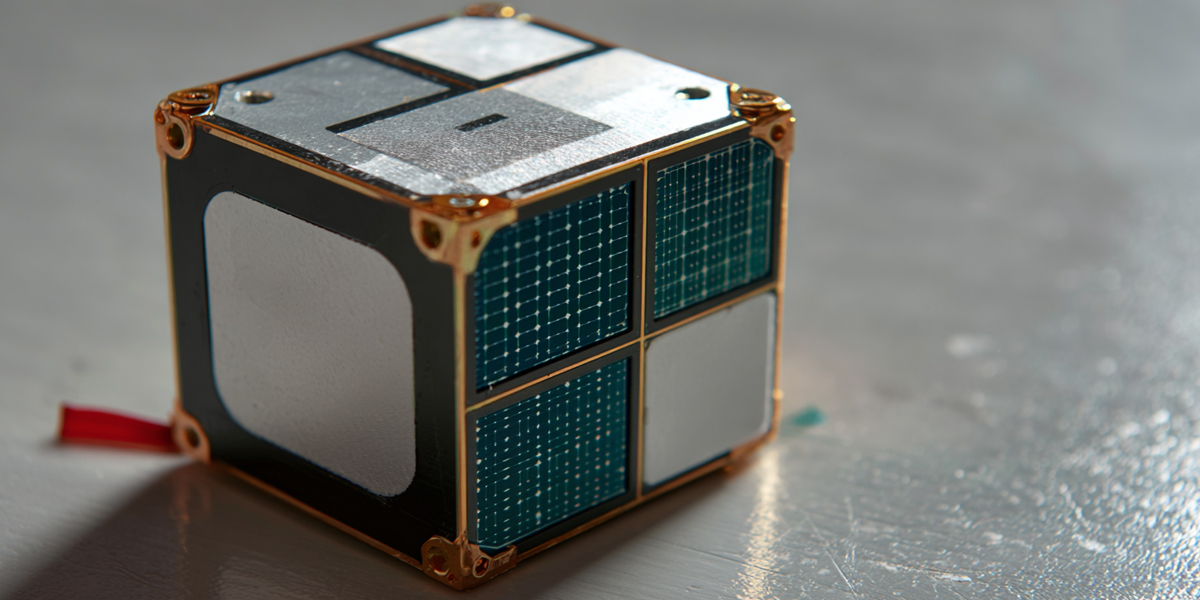
Nanosatellite is the formal term for the roughly 1 to 10 kilogram class of small satellites, and plenty of buyers, particularly outside the hobbyist and university CubeSat world, search for a nanosatellite manufacturer rather than a CubeSat manufacturer. The companies are frequently the same ones. Here is how to actually find and evaluate them.
Who Actually Builds Nanosatellites for Hire
The nanosatellite manufacturing landscape includes a mix of specialist small-satellite companies, larger aerospace primes with small-satellite divisions, and university-spinoff manufacturers that scaled up from research programs. Specialist companies, those whose entire business is building nanosatellites rather than one division among many, tend to offer faster turnaround and more direct access to the engineering team actually building your spacecraft, since you are not competing for attention with a larger division's bigger programs.
Flight Heritage Is the First Filter
A good opening question for any nanosatellite manufacturer is how many of their spacecraft are currently operating in orbit, not just how many have launched. A spacecraft that launched but failed to establish contact or stopped operating early does not count as a success story, even if it appears in a company's launch history. A credible manufacturer will give you a specific, current number and can usually point to publicly trackable spacecraft by name or NORAD catalog ID.
Match the Manufacturer to Your Payload Type
Nanosatellite manufacturers often develop particular strength in certain mission types: Earth observation, communications relay, technology demonstration, or hosted commercial payloads. It is worth asking directly whether they have flown a payload similar in power draw, data volume, or pointing requirement to yours, rather than only asking about their general capability. A manufacturer with strong Earth observation heritage is not automatically the right choice for a communications-focused mission, even though both fall under the same nanosatellite umbrella.
Domestic Manufacturing and Export Control
If your mission involves sensitive technology, international partners, or university research with export-control considerations, it makes sense to ask specifically about ITAR and EAR classification for the components the manufacturer uses. Some nanosatellite manufacturers build with ITAR-free components wherever possible specifically to simplify this process for customers, including international customers and multi-institution research teams, which can meaningfully shorten your own compliance timeline.
Quality Process, Not Just a Logo
It is useful to ask whether the manufacturer's processes are aligned with or certified to AS9100, the aerospace quality management standard, and to request an example of their test documentation style, with customer details redacted. This tells you more about how carefully your spacecraft will actually be built and tested than any general capability statement.
A Real Example of Scope and Timeline
Blackwing Space, a nanosatellite manufacturer building its Sparrow platform and Rook flight computer in-house, completed its Baby Bird mission, a 1.5U nanosatellite carrying three separate commercial payloads for three different customers, in about five months from signed contract to orbital deployment on a SpaceX rideshare launch. Asking a prospective manufacturer how their typical timeline compares to a reference point like this, and why their program would run faster or slower for your specific payload, is a more useful question than simply asking how long it takes to build a nanosatellite in the abstract.
Red Flags Worth Noticing
It pays to be cautious of a manufacturer that cannot name a specific, currently operating spacecraft when asked, that provides a price before understanding your payload's power and data requirements, or that describes its quality process only in general terms rather than pointing to a specific standard like AS9100. These are signs of a company still building its track record on your program instead of bringing a proven one to it. A newer manufacturer is not automatically a bad choice, since every company flies a first mission at some point, but it is a reason to weight schedule risk accordingly and keep more contingency in your own plan.
What a Real Schedule Commitment Looks Like
A reasonable ask is a schedule built around specific milestones, such as preliminary design review, payload integration, environmental qualification testing, and delivery, each with a date, rather than a general range like six to twelve months. A manufacturer who has actually run several of these programs will have that milestone structure ready to show you without much prompting. If a manufacturer can only offer a broad range with no milestone detail, that is usually a sign their process is less mature than their marketing suggests.
Getting Multiple Quotes That Actually Compare
It helps to give every manufacturer you talk to the same payload specification: mass, power draw, data volume, pointing requirement, and target orbit. Quotes built from inconsistent inputs are not actually comparable, no matter how close the final numbers look. A manufacturer willing to walk through their quote line by line, explaining what drives each cost, is generally a better long-term partner than one who only provides a single total figure.

Related Articles