CubeSat vs Traditional Satellite: Which is Right for Your Mission?
A detailed comparison to help you choose the right satellite platform for your mission
Organizations planning satellite missions face a fundamental choice: build a traditional satellite or use a CubeSat platform. Each approach has distinct advantages, limitations, and ideal use cases. This guide helps you make an informed decision.
Size and Mass Comparison
Traditional satellites range from small satellites (100-500 kg) to large geostationary platforms (4,000-6,000 kg). They measure meters across and require significant launch vehicle capacity.
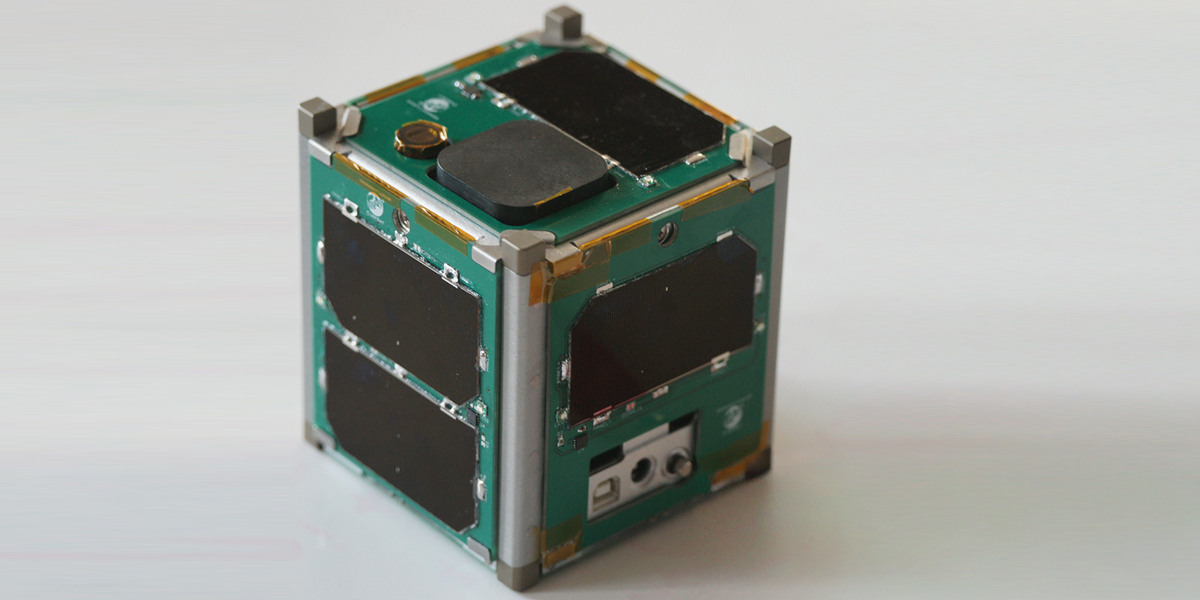
CubeSats follow standardized dimensions based on the 10x10x10 cm "U" unit. Common sizes are 1U (1.33 kg), 3U (4 kg), 6U (8 kg), and 12U (16 kg). Their small size allows multiple satellites to share launch opportunities.
Development Timeline
Traditional satellites typically require 3-7 years from initial concept to launch. The development process includes extensive requirements definition, detailed design and engineering, component qualification and testing, integration and environmental testing, and launch integration and preparation.
CubeSat missions can launch in 6-24 months depending on complexity. Commercial platforms further accelerate timelines by providing proven bus designs.
Cost Comparison
Traditional satellite missions cost $50 million to $500+ million including satellite, launch, and ground segment. Even small satellites rarely cost less than $10 million total.
CubeSat missions range from $150,000 to $2 million for complete end-to-end missions. Platform costs are $10,000-$500,000, launch costs are $25,000-$500,000, and ground segment and operations are $50,000-$500,000.
This 50-500x cost difference fundamentally changes who can access space.
Capability Comparison
Traditional satellites offer advantages in several areas including higher power generation (kilowatts vs. watts), larger payload capacity, longer operational lifetime (10-15 years typical), more sophisticated instruments, and higher data rates and bandwidth.
CubeSats provide different strengths: rapid deployment and replacement, lower risk enabling innovation, constellation deployment at affordable cost, frequent technology updates, and accessible for organizations without massive budgets.
Mission Suitability
Traditional satellites excel at missions requiring high power, long-duration operations, large optical systems, geostationary orbit, and high-bandwidth communications.
CubeSats are ideal for Earth observation with moderate resolution, IoT and M2M communications, technology demonstrations, scientific experiments, constellation-based services, and rapid response missions.
Risk Profile
Traditional satellites represent high-risk, high-value assets. A single failure means mission failure and loss of massive investment. Extensive testing and redundancy are required. Long development cycles risk technological obsolescence.
CubeSats embrace higher individual risk. Lower cost per unit allows for acceptable failure rates. Rapid replacement cycles enable learning from failures. Constellation architectures provide inherent redundancy.
Regulatory Considerations
Both platforms require FCC licensing for U.S. operators, ITU frequency coordination, and orbital debris mitigation plans. However, CubeSats benefit from streamlined processes for small satellites, faster licensing timelines, lower associated costs, and simplified export controls for commercial systems.
Ground Segment Requirements
Traditional satellites often require dedicated ground stations with large antennas for high data rates, specialized equipment, and 24/7 operations teams.
CubeSats can leverage shared ground station networks, smaller antennas, automated operations, and commercial ground station services.
Technology Maturity
Traditional satellites use fully space-qualified components with extensive flight heritage, qualified for harsh space environment, and designed for long mission durations.
CubeSats increasingly use automotive-grade components with appropriate protection, COTS parts adapted for space, and designs optimized for 2-5 year lifetimes.
Decision Framework
Choose traditional satellites when you need high power (kilowatts), long operational lifetime (10+ years), geostationary orbit, large aperture optical systems, or high data rates (gigabits per second).
Choose CubeSats when you need rapid deployment (under 2 years), limited budget (under $5 million), constellation architecture, technology demonstration, moderate imaging resolution, or IoT/M2M communications.
Hybrid Approaches
Some missions benefit from combining both approaches. Use CubeSats for rapid technology validation before committing to traditional satellites. Deploy CubeSat constellations with traditional satellite hubs. Start with CubeSats and upgrade to traditional platforms as business matures.
Case Studies
Planet Labs deployed 200+ CubeSats for daily Earth imaging - impossible with traditional satellites due to cost. Their constellation approach provides daily global coverage. Traditional satellites would require decades and billions of dollars to achieve similar coverage.
Conversely, high-resolution intelligence satellites still require traditional platforms. Their meter-class telescopes and high-power requirements exceed CubeSat capabilities.
Future Convergence
The gap between CubeSats and traditional satellites is narrowing. Larger CubeSat form factors (12U, 16U) approach small satellite capabilities. Miniaturization enables sophisticated instruments in smaller packages. Propulsion systems allow CubeSats to reach various orbits. And inter-satellite links enable distributed sensing networks.
Meanwhile, traditional satellites adopt lessons from CubeSats including modular design, commercial components, and rapid development.
Making Your Decision
Selecting between CubeSats and traditional satellites requires careful analysis of mission requirements, budget constraints, timeline pressures, risk tolerance, and organizational capabilities.
Most organizations starting space programs should seriously consider CubeSats. The lower cost, faster timelines, and reduced risk make them ideal for first missions, technology validation, and building organizational experience.
Once you understand space operations through CubeSat missions, you can make better-informed decisions about whether traditional satellites serve your evolving needs.

Related Articles