IoT Satellite Connectivity: Complete Guide for Remote Monitoring
How satellite IoT connectivity is enabling global remote monitoring and asset tracking
The Internet of Things has fundamentally reshaped how businesses monitor assets, infrastructure, and environmental conditions across their operations. Yet despite this transformation, a critical limitation has persisted: traditional IoT networks simply don't function in remote locations. Satellite-based IoT connectivity is now eliminating this constraint, enabling truly global monitoring capabilities that were previously impossible or prohibitively expensive.
Understanding Satellite IoT Technology
Satellite IoT represents a fundamental shift in how connected devices communicate. Rather than relying on cellular towers or Wi-Fi infrastructure, these devices transmit data directly to orbiting satellites. This seemingly simple change unlocks extraordinary capabilities, enabling sensors and trackers to operate anywhere on Earth—from the middle of oceans to polar ice sheets, from remote deserts to mountain peaks—without requiring any terrestrial infrastructure whatsoever.
The key distinction between satellite IoT and traditional satellite communications lies in optimization. While broadband satellite services are engineered to deliver high-bandwidth connections for internet access and video streaming, IoT satellite systems are purpose-built for an entirely different use case. They're optimized specifically for small data packets: sensor readings, GPS coordinates, equipment status updates, and alert notifications. This focused approach to small-data transmission enables remarkably affordable device costs, extended battery life measured in years rather than months, and comprehensive global coverage that cellular networks can never match.
The Coverage Gap: Why Satellite Connectivity Matters
The stark reality of terrestrial IoT networks is that they cover only a surprisingly small fraction of Earth's surface. Cellular networks excel at serving populated areas where tower infrastructure makes economic sense, but they leave vast regions completely without coverage. Consider that oceans comprise approximately 70% of Earth's surface, yet cellular coverage is essentially non-existent beyond coastal waters. Add to this deserts and wilderness areas, polar regions, international waters and airspace, and numerous developing regions with limited infrastructure, and the coverage gap becomes impossible to ignore.
For operations in these areas, satellite connectivity isn't merely a premium option or convenient alternative—it's the only viable solution. No amount of infrastructure investment can economically extend cellular networks to cover the middle of the Pacific Ocean or Antarctica. Organizations operating in these environments must either accept connectivity gaps or embrace satellite solutions.
The implications extend beyond simple coverage maps. When businesses lack connectivity in remote areas, they face cascading operational challenges. Manual data collection requires expensive site visits, creating delays and adding personnel costs. Equipment failures go undetected until the next inspection. Environmental changes occur without documentation. Shipments move through coverage dead zones, creating tracking gaps that complicate logistics. These aren't minor inconveniences—they're fundamental operational limitations that constrain business capabilities.
Global Connectivity Unleashed: How Satellite IoT Is Transforming Remote Monitoring
The Internet of Things has fundamentally reshaped how businesses monitor assets, infrastructure, and environmental conditions across their operations. Yet despite this transformation, a critical limitation has persisted: traditional IoT networks simply don't function in remote locations. Satellite-based IoT connectivity is now eliminating this constraint, enabling truly global monitoring capabilities that were previously impossible or prohibitively expensive.
Understanding Satellite IoT Technology
Satellite IoT represents a fundamental shift in how connected devices communicate. Rather than relying on cellular towers or Wi-Fi infrastructure, these devices transmit data directly to orbiting satellites. This seemingly simple change unlocks extraordinary capabilities, enabling sensors and trackers to operate anywhere on Earth—from the middle of oceans to polar ice sheets, from remote deserts to mountain peaks—without requiring any terrestrial infrastructure whatsoever.
The key distinction between satellite IoT and traditional satellite communications lies in optimization. While broadband satellite services are engineered to deliver high-bandwidth connections for internet access and video streaming, IoT satellite systems are purpose-built for an entirely different use case. They're optimized specifically for small data packets: sensor readings, GPS coordinates, equipment status updates, and alert notifications. This focused approach to small-data transmission enables remarkably affordable device costs, extended battery life measured in years rather than months, and comprehensive global coverage that cellular networks can never match.
The Coverage Gap: Why Satellite Connectivity Matters
The stark reality of terrestrial IoT networks is that they cover only a surprisingly small fraction of Earth's surface. Cellular networks excel at serving populated areas where tower infrastructure makes economic sense, but they leave vast regions completely without coverage. Consider that oceans comprise approximately 70% of Earth's surface, yet cellular coverage is essentially non-existent beyond coastal waters. Add to this deserts and wilderness areas, polar regions, international waters and airspace, and numerous developing regions with limited infrastructure, and the coverage gap becomes impossible to ignore.
For operations in these areas, satellite connectivity isn't merely a premium option or convenient alternative—it's the only viable solution. No amount of infrastructure investment can economically extend cellular networks to cover the middle of the Pacific Ocean or Antarctica. Organizations operating in these environments must either accept connectivity gaps or embrace satellite solutions.
The implications extend beyond simple coverage maps. When businesses lack connectivity in remote areas, they face cascading operational challenges. Manual data collection requires expensive site visits, creating delays and adding personnel costs. Equipment failures go undetected until the next inspection. Environmental changes occur without documentation. Shipments move through coverage dead zones, creating tracking gaps that complicate logistics. These aren't minor inconveniences—they're fundamental operational limitations that constrain business capabilities.
Diverse Applications Across Industries
Satellite IoT enables a wide range of applications across virtually every industry operating in remote environments. The technology proves particularly transformative in several key sectors.
Maritime Operations and Ocean Monitoring
The maritime industry has embraced satellite IoT with particular enthusiasm, as vessels spend most of their operational lives in areas with no cellular coverage. Commercial shipping companies deploy satellite IoT devices to maintain continuous visibility of vessel positions, monitor engine performance and fuel consumption, track cargo conditions (especially critical for temperature-sensitive shipments), and enable emergency alert systems that function anywhere on the ocean. Fishing fleets use the technology to optimize routes and report catches in real-time, while oceanographic researchers deploy sensors across vast ocean areas to study currents, temperature changes, and marine ecosystems.
Agricultural Innovation in Remote Fields
Modern agriculture increasingly relies on data-driven decision-making, but many productive agricultural areas lack reliable cellular coverage. Satellite IoT enables farmers and agricultural managers to deploy soil moisture sensors across expansive fields, monitor weather conditions at the micro-local level, track equipment location and operational status, and control irrigation systems remotely. These capabilities translate directly into improved yields, reduced water consumption, and more efficient operations. A vineyard in a remote valley can optimize irrigation based on real-time soil data. A cattle ranch spanning thousands of acres can track herd locations and health metrics without cellular infrastructure.
Environmental Monitoring and Conservation
Environmental scientists and conservation organizations face inherent challenges: the environments they study are often remote by definition. Satellite IoT has become essential infrastructure for wildlife tracking studies that follow animal migration patterns across continents, remote weather stations that provide crucial climate data from areas without human presence, seismic sensors deployed in geologically active but unpopulated regions, and water quality monitoring in pristine watersheds far from urban areas. These applications generate invaluable scientific data that would be impossible to collect through traditional means.
Asset Tracking and Logistics
Global supply chains move goods through areas with inconsistent or non-existent cellular coverage. Satellite IoT devices attached to shipping containers provide uninterrupted location tracking, environmental monitoring that ensures cargo integrity, impact detection that identifies potential damage, and door sensor alerts that enhance security. The technology proves equally valuable for tracking remote equipment like construction machinery operating in developing regions, vehicles traveling through rural or international areas, and valuable assets stored or used in remote locations.
Energy Infrastructure Management
The energy sector operates extensive infrastructure in remote areas where satellite connectivity provides the only practical monitoring solution. Oil and gas companies use satellite IoT for remote well monitoring, pipeline leak detection, equipment performance tracking, and safety system monitoring. Renewable energy installations, often located in remote areas with excellent wind or solar resources, depend on satellite connectivity to monitor system performance, schedule maintenance, and aggregate production data.
Technical Architecture: How Satellite IoT Systems Function
Understanding satellite IoT requires examining the integrated system of components that work together to enable remote connectivity. The architecture consists of several distinct layers, each performing essential functions.
Ground Segment: IoT Devices and Sensors
At the operational edge, IoT devices equipped with specialized satellite modems collect sensor data from various inputs. These devices are engineered specifically for remote deployment, incorporating ultra-low-power designs that enable years of operation on battery power, ruggedized enclosures that withstand harsh environmental conditions, efficient antennas sized appropriately for small device form factors, and onboard processing that optimizes data before transmission. The engineering challenge involves balancing capability against power consumption and cost—creating devices sophisticated enough to capture and transmit valuable data while remaining affordable enough to deploy at scale.
Space Segment: LEO Satellite Constellations
Modern satellite IoT systems predominantly utilize Low Earth Orbit (LEO) constellations rather than traditional geostationary satellites. This architectural choice proves crucial for enabling practical IoT applications. LEO satellites orbit at altitudes between 400 and 1,200 kilometers above Earth's surface, compared to geostationary satellites at approximately 36,000 kilometers. This dramatic reduction in altitude delivers multiple operational advantages: significantly reduced latency in data transmission, lower power requirements for ground devices, smaller and less expensive device antennas, and substantially improved signal strength. The tradeoff involves complexity - LEO satellites move rapidly relative to Earth's surface, requiring coordinated constellations of multiple satellites to maintain continuous coverage. However, advances in satellite manufacturing and launch capabilities have made constellation deployment increasingly economical.
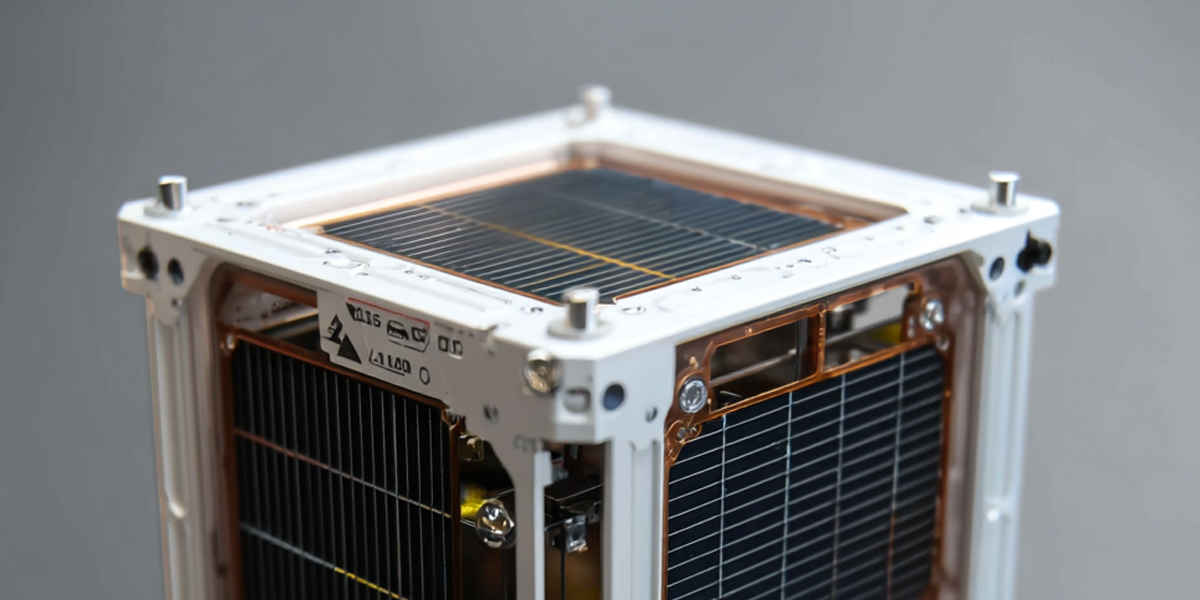
The emerging satellite industry has seen rapid innovation in platform development, with new providers deploying constellations optimized specifically for IoT rather than adapting broadband satellite technology. Modular satellite platforms that can be rapidly manufactured and deployed are driving costs down while improving performance. Some platforms leverage automotive-grade components to achieve reliability at significantly reduced costs compared to traditional space-grade hardware, accepting shorter orbital lifetimes (2-3 years rather than 10-15) in exchange for dramatically lower manufacturing expenses and faster technological iteration.
Ground Stations and Data Infrastructure
When satellites pass over ground stations, they download accumulated data transmissions from IoT devices. These ground stations function as gateways between the space and internet segments, receiving radio transmissions from satellites, processing and routing data to appropriate cloud platforms, and uploading commands or configuration updates for relay to devices. Geographic distribution of ground stations enhances system responsiveness—more stations mean satellites can downlink data more frequently, reducing latency for time-sensitive applications.
Cloud Platforms and User Interfaces
The cloud layer provides the interface between raw satellite data and actionable business intelligence. Modern platforms offer comprehensive capabilities including data processing and storage, API endpoints for system integration, visualization dashboards that make data comprehensible, alert mechanisms for critical events, and analytics tools that extract insights from accumulated data. Leading providers design these platforms with open standards and extensive integration capabilities, recognizing that satellite IoT data often needs to flow into existing enterprise systems.
Data Transmission: Protocols Optimized for Efficiency
Satellite IoT systems employ specialized protocols engineered specifically for the unique constraints of satellite communication and remote device operation. Unlike cellular or Wi-Fi protocols designed for high-bandwidth, always-on connectivity, satellite IoT protocols prioritize power efficiency and reliable delivery of small data packets.
Ultra-Narrowband Communication
Many satellite IoT systems utilize ultra-narrowband transmission, concentrating signal energy into extremely narrow frequency bands. This approach enables remarkably low power consumption—devices can transmit successfully while consuming less than one watt. The tradeoff involves very low data rates, but for applications transmitting sensor readings or status updates, the data volumes are minimal enough that ultra-narrowband proves ideal.
Store-and-Forward Architecture
Most satellite IoT systems operate on store-and-forward principles rather than providing real-time connectivity. Devices store data locally and transmit when satellites pass overhead. This approach matches the orbital mechanics of LEO constellations while enabling extremely power-efficient device operation. For applications where real-time response isn't critical—which encompasses most remote monitoring scenarios - store-and-forward proves entirely sufficient while enabling days or weeks of operation on modest battery capacity.
Scheduled Communication Windows
Some systems enable devices to calculate satellite pass times and schedule transmissions accordingly, optimizing power usage by only activating transmission systems when satellites are in range. This predictive approach further extends battery life while ensuring reliable data delivery.
Economic Considerations: Cost Analysis and ROI
Understanding the economics of satellite IoT requires examining both direct costs and the value proposition relative to alternatives.
Direct Cost Components
Satellite IoT pricing typically encompasses three elements. Device costs range from $100 for basic trackers to $500 or more for sophisticated sensors with multiple capabilities. Service subscriptions generally run between $5 and $50 per device monthly, depending on message frequency and features. Some providers charge per-message fees, while others include data transmission in subscription pricing. Organizations deploying satellite IoT must carefully evaluate total cost of ownership, including device hardware, ongoing service fees, and any associated costs for installation, maintenance, or integration.
Comparative Economics
While satellite IoT costs exceed terrestrial alternatives where cellular coverage exists, the economic comparison shifts dramatically in remote areas. Installing cellular infrastructure to cover a remote region might require millions in capital expenditure for towers, backhaul connectivity, and ongoing maintenance—investments that make no economic sense for most applications. Manual data collection through regular site visits incurs substantial costs in personnel time, travel expenses, and delays between observations. The opportunity cost of operating without data can prove substantial: equipment failures going undetected, environmental compliance gaps, operational inefficiencies, and missed optimization opportunities. Against these alternatives, satellite IoT often represents the most cost-effective solution by orders of magnitude.
Value Realization
Organizations implementing satellite IoT often realize value in unexpected ways beyond the immediate data collection benefits. Insurance costs may decrease with improved monitoring and faster emergency response. Equipment lifespan extends through predictive maintenance enabled by continuous monitoring. Operational efficiency improves with data-driven decision making. Regulatory compliance becomes demonstrable through comprehensive documentation. Customer service enhances with accurate shipment tracking and proactive issue resolution. These secondary benefits often justify satellite IoT investments even in scenarios where alternatives exist.
Implementation: Deployment Best Practices
Successful satellite IoT deployments require attention to several critical factors that significantly impact system performance and reliability.
Antenna Positioning and Sky View
Satellite communication requires clear line-of-sight between device antennas and satellites. Proper deployment demands careful antenna placement ensuring unobstructed sky view (ideally 180-degree hemisphere), minimizing nearby structures or terrain that might block signals, considering seasonal changes (such as foliage growth), and accounting for device orientation throughout operations. Even slight obstructions can dramatically reduce successful transmission rates. Many deployment failures trace to inadequate attention to antenna positioning.
Power Management Strategy
Remote devices must operate for months or years without maintenance. Comprehensive power planning involves accurately sizing batteries for expected mission duration and transmission frequency, incorporating solar charging where practical and appropriate, optimizing transmission schedules to balance data freshness against power consumption, and implementing intelligent power management that reduces consumption during low-priority periods. Devices deployed without proper power planning often fail prematurely, creating costly replacement requirements.
Environmental Protection
Remote deployment environments can prove extremely harsh. Successful devices incorporate weatherproof enclosures rated appropriately for expected conditions, thermal management for extreme temperatures, protection against wildlife interference, tamper-resistant designs where security concerns exist, and appropriate mounting that withstands wind, vibration, or other environmental stresses. Testing devices in environments matching actual deployment conditions proves essential.
Regulatory Compliance
Satellite communications involve radio spectrum use that requires regulatory compliance. Organizations must obtain necessary licenses from relevant authorities (FCC in the United States, corresponding agencies internationally), ensure frequency authorization for operation areas, comply with any ITAR or EAR requirements for technology exports, and verify that devices meet local technical standards. Regulatory issues can delay deployments or create legal complications if not addressed proactively.
Technology Ecosystem Comparison
Organizations evaluating remote monitoring solutions should understand how satellite IoT compares to alternative technologies to make informed decisions.
Cellular IoT works exceptionally well where coverage exists, offering lower costs, higher data rates, and lower latency than satellite alternatives. However, cellular coverage limitations prove absolute constraints—where networks don't reach, cellular IoT simply cannot function.
LoRaWAN and similar long-range radio technologies provide impressive range from gateway infrastructure (up to 15 kilometers in favorable conditions) with extremely low power consumption. However, these technologies require gateway deployment, essentially creating private networks. For truly remote operations, deploying and powering gateways may prove as challenging as the monitoring application itself.
Satellite IoT occupies a distinct position: higher cost than terrestrial alternatives but with genuinely global coverage requiring no infrastructure deployment. The key decision criterion becomes whether operations occur in areas with reliable cellular coverage. If yes, cellular IoT generally proves more economical. If no, satellite IoT becomes the only practical solution.
Integration with Enterprise Systems
Modern satellite IoT platforms recognize that data collection represents only the beginning of value creation. Data must integrate into existing enterprise systems where it can drive operational decisions and business processes.
Leading platforms provide comprehensive APIs using RESTful standards, webhook systems for pushing real-time alerts to other systems, data export capabilities in standard formats, and SDKs in popular programming languages. Enterprise integration typically involves connections to SCADA systems for industrial process control, ERP platforms for business process integration, analytics and business intelligence tools, and custom visualization platforms. The trend toward open standards and developer-friendly platforms reflects recognition that satellite IoT providers succeed by enabling customers to extract maximum value from data rather than creating closed ecosystems.
Evolution and Future Trends
Satellite IoT technology continues evolving rapidly, driven by advances in satellite manufacturing, launch capabilities, device miniaturization, and software sophistication. Several clear trends are reshaping the industry.
Costs continue declining as satellite constellations scale and competition intensifies. More satellites in orbit improve coverage and reduce latency. Manufacturing advances reduce satellite costs, enabling larger constellations. Launch cost reductions make frequent constellation refreshes economically viable. These trends compound, creating a virtuous cycle of improving capability and declining costs.
Device miniaturization continues relentlessly. Current-generation devices prove dramatically smaller and more power-efficient than those available just years ago. Emerging devices will integrate multiple sensors in compact packages, incorporate edge processing for local data analysis, and achieve multi-year operational lifetimes on increasingly modest power budgets.
Software-defined approaches increasingly enable satellites to be reprogrammed in orbit, adding capabilities or optimizing performance based on actual usage patterns. This flexibility transforms satellites from fixed-purpose hardware into adaptable platforms that can evolve throughout their operational lives.
Integration with terrestrial networks creates hybrid solutions where devices intelligently select the most appropriate connectivity method. Devices might use cellular where available, automatically switching to satellite in remote areas. This seamless roaming approach optimizes cost while ensuring universal connectivity.
Selecting a Provider: Evaluation Criteria
Organizations evaluating satellite IoT solutions should systematically assess several critical factors. Constellation coverage in target operational regions proves fundamental—verify that providers can actually deliver connectivity where you need it. Device specifications must match application requirements for sensors, power consumption, environmental protection, and size constraints. Pricing transparency helps avoid unexpected costs—understand all fees including devices, subscriptions, data transmission, and any additional charges. Integration capabilities determine how easily satellite data flows into existing systems—evaluate APIs, documentation, and available support. Provider stability and roadmap matter for multi-year deployments—assess company viability and technology evolution plans. Customer support quality significantly impacts successful deployment—investigate available documentation, technical support, and professional services.
Implementation Strategy: Starting with Pilot Projects
Organizations new to satellite IoT should resist the temptation to immediately deploy at scale. Instead, structured pilot projects validate technology and refine requirements with manageable risk and investment.
Effective pilots begin by identifying a specific use case with clear, measurable value. Deploy a modest number of devices (typically 5-20) sufficient to evaluate performance across representative conditions. Monitor performance over an adequate timeframe (generally 3-6 months) to experience seasonal variations and accumulate meaningful data. Evaluate both technical performance (successful transmission rates, battery life, data quality) and business value (does the data enable meaningful operational improvements?). Calculate actual costs versus benefits including all implementation expenses and quantified operational value. Successful pilots validate the technical solution and business case, building organizational confidence for broader deployment. Failed pilots identify issues early when they're inexpensive to address.
Conclusion: The Path to Truly Global Operations
Satellite IoT represents more than an incremental improvement in remote monitoring—it's a fundamental enabler of genuinely global operations. For the first time, organizations can monitor assets, infrastructure, and environmental conditions anywhere on Earth with practical economics and minimal infrastructure investment.
As constellations expand, costs decline, and technology matures, satellite IoT is transitioning from specialized solution to standard infrastructure for remote operations. Organizations that embrace this technology position themselves to operate truly globally, making data-driven decisions regardless of location. The connectivity gap that constrained remote operations for decades is finally closing. The question for forward-looking organizations is not whether to adopt satellite IoT, but how quickly to integrate it into operational infrastructure.
The convergence of affordable platforms, innovative manufacturing approaches that reduce costs without compromising reliability, and open standards that enable ecosystem development creates unprecedented opportunities. Whether monitoring shipping containers crossing oceans, tracking equipment in remote oil fields, studying wildlife in pristine environments, or managing distributed energy infrastructure, satellite IoT delivers connectivity that simply wasn't previously possible. The age of truly global, connected operations has arrived.

Related Articles