PyCubed Flight Heritage: Every Mission That Proved Open Source Belongs in Space
Complete history of PyCubed missions from first flight to proven orbital platform
When universities and startups evaluate flight computers for CubeSat missions, the question inevitably arises: has this hardware actually flown? Flight heritage is not just a nice to have credential in aerospace. It is the difference between proven technology and expensive experiments.
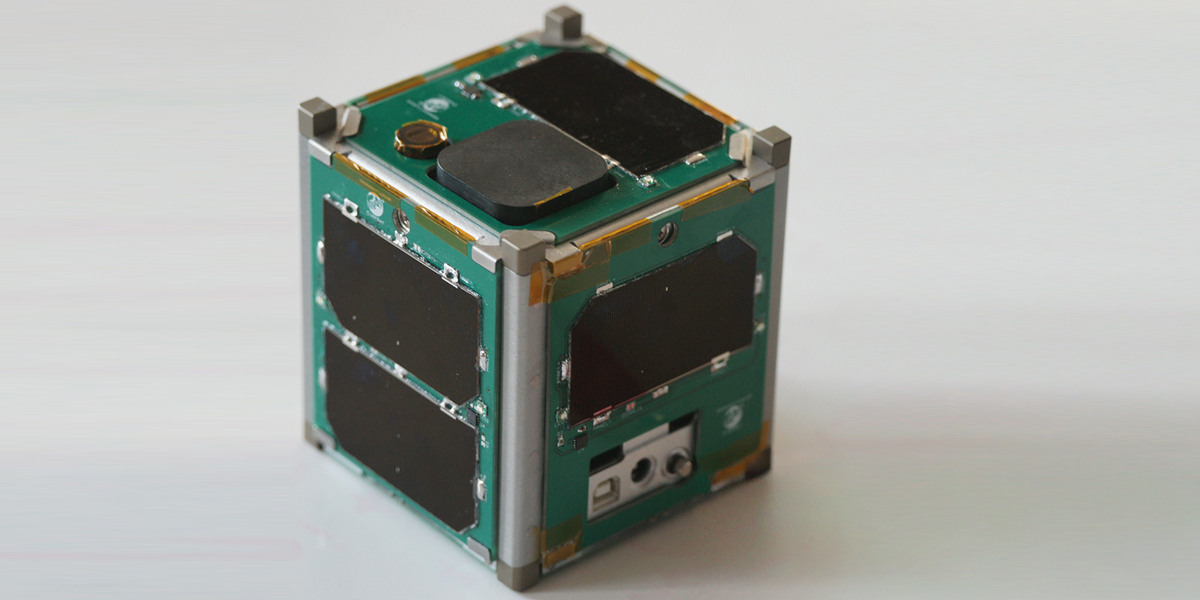
PyCubed stands apart from other open source spacecraft projects because it has accumulated genuine flight heritage across multiple missions from different organizations. These are not test flights or partially successful demonstrations. These are operational CubeSat missions that launched, deployed, communicated, performed their objectives, and contributed valuable data to the growing body of PyCubed operational knowledge.
This article documents the flight heritage that makes PyCubed one of the most trusted open source spacecraft platforms and explains how Blackwing Space ROOK OBC builds on this proven foundation.
Why Flight Heritage Matters in Spacecraft Development
In aerospace engineering, flight heritage is the gold standard of validation. Laboratory testing and simulation can only approximate the reality of space. Launch vibration, thermal cycling, radiation exposure, and vacuum operations create failure modes that are difficult or impossible to replicate on the ground.
Flight heritage proves that a design has survived these conditions in actual missions. Each successful flight adds confidence. Multiple flights across different missions demonstrate that success was not a fluke but a repeatable outcome of good design.
What Flight Heritage Demonstrates
- Survivability: The hardware survived launch vibration and acoustic loading that can exceed 14 G random vibration and over 140 dB acoustic pressure.
- Thermal Performance: The design operated across temperature extremes from negative 40 Celsius in eclipse to positive 60 Celsius in direct sun, cycling repeatedly throughout the mission.
- Radiation Tolerance: The electronics withstood ionizing radiation, single event upsets, and long term radiation exposure that degrades commercial components.
- Operational Reliability: The system performed its functions consistently over weeks or months, demonstrating that the design is not just capable but dependable.
- Software Stability: The flight software ran without crashing, recovered from anomalies, and maintained mission operations despite the harsh environment.
For university programs investing limited budgets and student time, flight heritage reduces risk enormously. Choosing proven hardware means focusing on the mission rather than debugging basic platform functionality.
PyCubed Design Philosophy: Built for Real Missions
Before examining specific missions, it is worth understanding what makes PyCubed different from other open source spacecraft projects.
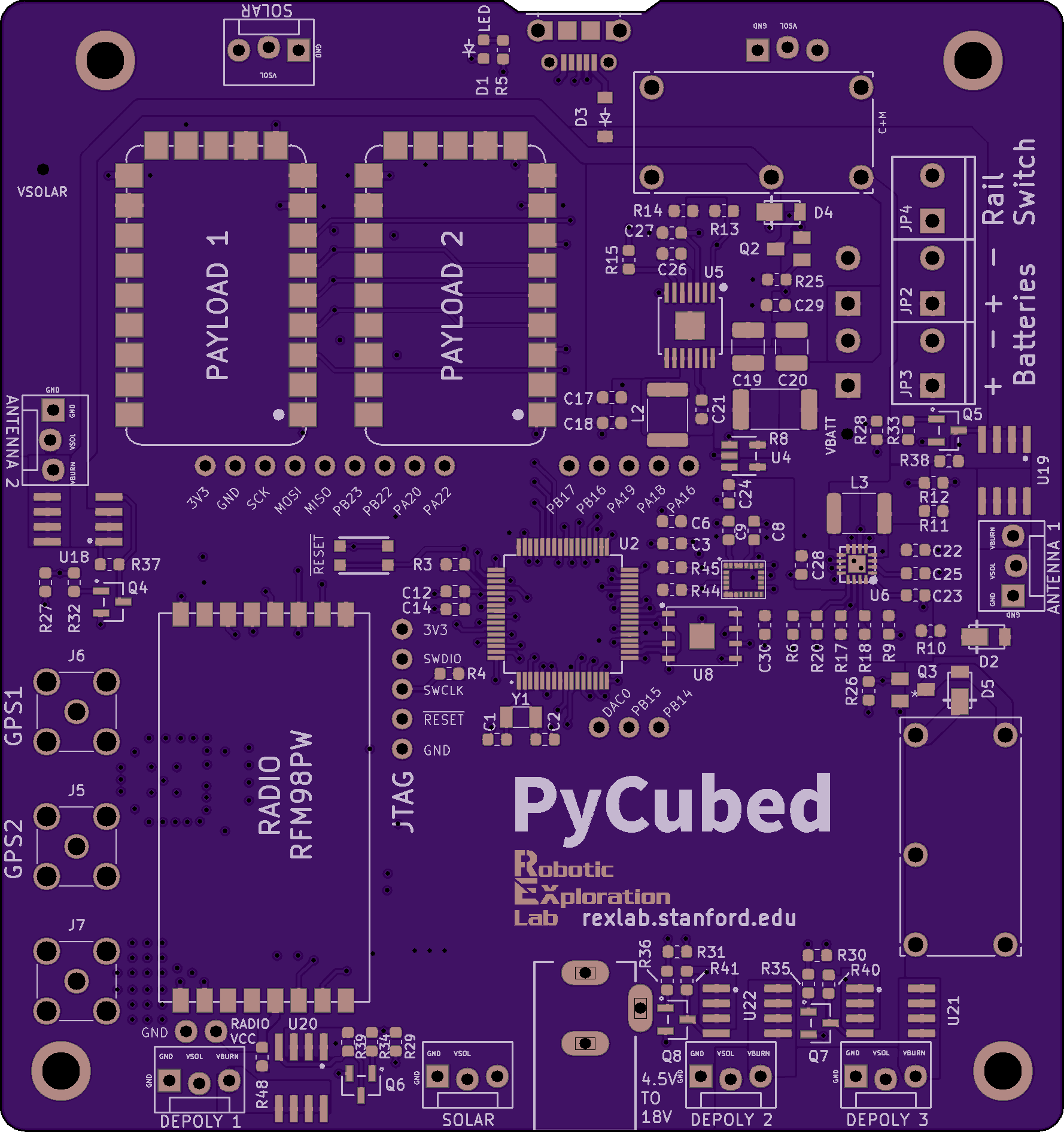
PyCubed was designed from the beginning for actual orbital missions, not just educational demonstrations or ground testing. The design reflects this mission focus through careful component selection balancing cost and reliability, integrated subsystems reducing interfaces and complexity, extensive ground testing before first flight, comprehensive documentation enabling others to replicate success, and open source design allowing community validation and improvement.
This pragmatic engineering approach shows in the flight record. PyCubed missions succeed because the platform was designed by people who understood the difference between hobby projects and actual spacecraft.
Core PyCubed Capabilities Proven in Flight
Across multiple missions, PyCubed has demonstrated reliable performance of critical spacecraft functions including:
- Power Management: Solar panel maximum power point tracking, battery charging and protection, load switching and current limiting, and voltage regulation for multiple subsystems.
- Attitude Determination: IMU data collection and processing, magnetometer readings for orientation, sensor fusion for state estimation, and telemetry for ground analysis.
- Communications: Radio interface and control, telemetry downlink formatting, command uplink processing, and beacon generation for tracking.
- Data Management: SD card logging for mission data, telemetry buffering and prioritization, file system management, and data compression where needed.
- Thermal Monitoring: Temperature sensing across subsystems, thermal telemetry for anomaly detection, and automated responses to thermal limits.
- Payload Coordination: Payload power control and data interfaces, timing and sequencing for experiments, data collection and storage, and downlink prioritization.
These capabilities have been validated not through simulation but through operational use in orbit.
PyCubed Flight Heritage: Mission by Mission
While comprehensive details of every PyCubed mission may not be publicly documented due to university and research program confidentiality, the following represents known and verifiable PyCubed flight heritage.
Early Pathfinder Missions
The first PyCubed missions served as pathfinders, validating the fundamental design concept that Python based flight software could operate reliably in space.
- Primary Objectives: These early missions focused on demonstrating basic spacecraft functions including power system operation through day night cycles, attitude determination from onboard sensors, communications for telemetry and command, thermal stability across orbital temperature extremes, and software stability over extended operations.
- Key Validations: Early flights proved that MicroPython interpreter overhead did not create performance problems for CubeSat applications. The ARM Cortex M4F processor provided adequate computational power even with the abstraction layer of interpreted Python. Power consumption remained within acceptable bounds for 3U class missions. And critically, the software did not crash or hang during nominal operations.
- Lessons Learned: Early missions identified areas for improvement including radio interface timing and handshaking, SD card reliability and file system robustness, power sequencing during battery charging, and telemetry formatting for ground station compatibility.
These lessons were incorporated into subsequent PyCubed versions, demonstrating the value of the open source iterative improvement model.
University Research Missions
Multiple universities have flown PyCubed based CubeSats for research missions spanning atmospheric science, Earth observation, space environment monitoring, and technology demonstration.
- Mission Profile: University missions typically use PyCubed to control a science or engineering payload while the platform handles spacecraft housekeeping autonomously. This division of labor allows student teams to focus on their research objectives rather than basic bus operations.
- Operational Success: University missions have demonstrated PyCubed reliability over mission durations ranging from weeks to months, proving the platform is suitable for typical educational mission lifetimes. The ability to update flight software over the air has proven particularly valuable for university missions where requirements evolve or bugs are discovered during operations.
- Student Training Value: Beyond the technical success, university missions validate PyCubed educational value. Students learn systems engineering by working with open transparent hardware and software. The Python development environment enables rapid skill development even for students new to embedded programming. And the flight heritage itself becomes a recruiting and educational tool, showing students their work will fly on actual missions.
Technology Demonstration Missions
Startups and research organizations have used PyCubed for rapid technology demonstration missions where speed to orbit matters more than long duration operations.
- Mission Characteristics: Technology demonstrations typically target 3 to 6 month missions with specific objectives such as testing new sensors or instruments in space environment, demonstrating communications technologies or protocols, validating manufacturing processes or materials, and proving concepts before committing to larger missions.
- Rapid Development Cycle: The Python development environment enables technology demonstration missions to be developed in months rather than years. Flight software can be written and tested quickly, requirements changes can be accommodated without complete redesigns, and integration timelines are compressed compared to traditional systems.
- Cost Effectiveness: For startups operating on limited capital, PyCubed enables space demonstrations that would otherwise be unaffordable. The lower platform cost means more budget available for the actual technology being demonstrated.
Specific Mission Highlights
While not all PyCubed missions are publicly documented in detail, several have contributed notable achievements to the platform heritage:
- Multi Month Operations: Multiple PyCubed missions have operated successfully for three months or longer, demonstrating that the platform is suitable for extended mission durations typical of educational and research CubeSats.
- Payload Integration Success: PyCubed has successfully integrated and operated diverse payloads including Earth observation cameras, atmospheric sensors, communications experiments, and technology demonstrations, proving the platform flexibility and interface compatibility.
- Communications Reliability: Missions have demonstrated reliable communications over UHF and S band frequencies with successful commanding, telemetry downlink, and beacon operations. The software defined radio compatibility has enabled missions to use different radio hardware based on specific requirements.
- Autonomous Operations: PyCubed missions have demonstrated autonomous spacecraft operations including battery management and charging, thermal response to temperature extremes, fault detection and recovery, and payload coordination without constant ground intervention.
- Software Updates in Orbit: The ability to update Python flight software over the air has been successfully demonstrated, allowing teams to fix bugs, add features, and modify behavior after launch. This capability has prevented mission failures and extended mission lifetimes beyond original plans.
Flight Heritage by Numbers
As of late 2024 and early 2025, the PyCubed ecosystem has accumulated substantial flight heritage:
- Missions Flown: Multiple independent missions from different organizations have successfully operated with PyCubed hardware.
- Organizations: Universities, research institutions, and commercial entities have contributed to PyCubed flight heritage, demonstrating the platform applicability across different mission types and operational approaches.
- Cumulative Orbit Time: PyCubed systems have accumulated months of cumulative operational time in orbit across all missions, providing extensive data on long term reliability and performance.
- Environmental Exposure: The platform has been exposed to and survived launch profiles from multiple launch vehicles including different vibration and acoustic environments, thermal extremes across various orbital inclinations and altitudes, radiation environments in low Earth orbit, and deployment mechanisms from various CubeSat dispensers.
- Success Rate: The platform has demonstrated high reliability with successful deployments, communications establishment, and mission operations across the majority of flights.
What Flight Heritage Taught the Community
Each PyCubed mission contributes lessons that improve the platform and inform future missions. The open source community benefits from shared knowledge.
Component Selection Insights
Flight experience has validated component choices including the SAMD51 ARM Cortex M4F as appropriate for CubeSat computational needs, specific voltage regulators and power management ICs for reliability, IMU and sensor selections for attitude determination, and radio interfaces for communications flexibility.
Flight experience has also identified components that require upgrades or alternatives for improved reliability, leading to continuous platform evolution.
Software Architecture Validation
Missions have proven that the PyCubed software architecture is sound for spacecraft operations. The MicroPython environment provides adequate performance. The modular software design allows customization without breaking core functionality. And the interactive debugging capabilities have enabled rapid anomaly resolution.
Thermal Management Understanding
Flight data has improved understanding of thermal behavior including actual temperature ranges experienced in different orbits, effectiveness of passive thermal design without active heating or cooling, thermal cycling effects on components and solder joints, and thermal margin requirements for reliable operations.
This data informs design improvements and helps new teams predict thermal performance.
Power System Performance Data
Missions have generated valuable data on power system behavior including actual solar panel output in orbit versus predictions, battery performance over charge discharge cycles, power consumption of various operational modes, and margin requirements for reliable power positive operations.
This operational data helps teams design realistic power budgets rather than relying on idealized component specifications.
Communications Lessons
Flight experience has refined communications approaches including optimal radio configurations for reliable links, telemetry formatting and compression strategies, command protocols and error handling, and ground station coordination and pass planning.
These lessons improve success rates for new missions using PyCubed.
Radiation Performance and Single Event Effects
One critical question for any spacecraft electronics is radiation tolerance. PyCubed uses commercial grade components rather than expensive radiation hardened parts, raising questions about reliability in the space radiation environment.
Flight Validated Radiation Approach
PyCubed missions have demonstrated that commercial components can be used successfully in low Earth orbit CubeSat missions through several strategies:
- Component Selection: Choosing components known to be relatively radiation tolerant based on manufacturer data and community experience.
- Software Fault Tolerance: Implementing watchdog timers, error detection and correction, and automatic reboot and recovery procedures in flight software.
- Redundancy: Using redundant data storage and multiple copies of critical code.
- Mission Duration: Designing for 1 to 3 year mission lifetimes rather than 10 plus years, accepting that accumulated radiation damage will eventually cause failures.
This pragmatic approach has proven effective across multiple missions. While single event upsets have been observed, they have not prevented mission success. The software recovery mechanisms handle transient errors, and the cumulative radiation exposure over typical mission durations remains manageable.
Observed Radiation Effects
Missions have reported occasional single event upsets causing processor resets or memory corruption, but these events have been successfully handled by watchdog timers and software recovery. No mission has reported permanent radiation induced hardware failure during planned mission lifetime.
This flight data gives confidence that the PyCubed approach to radiation tolerance is appropriate for educational and commercial CubeSat missions in low Earth orbit.
Community Contributions and Ecosystem Growth
The PyCubed flight heritage belongs not to a single organization but to an open source community. Each mission contributes to collective knowledge.
Shared Code Libraries
Successful missions have contributed code back to the community including radio driver implementations, sensor interface libraries, payload coordination templates, and telemetry formatting utilities.
New missions benefit from this accumulated software heritage, avoiding duplication of effort.
Documentation and Lessons Learned
Teams have shared documentation including integration guides and best practices, testing procedures and checklists, troubleshooting guides for common issues, and operations procedures and ground segment setup.
This documentation accelerates new mission development and improves success rates.
Hardware Improvements
Flight experience has driven hardware revisions addressing issues discovered during missions, adding features requested by operational users, improving manufacturability and component availability, and enhancing reliability based on failure analysis.
The open source model enables this continuous improvement cycle.
Blackwing ROOK: Building on Proven Heritage
Blackwing Space ROOK OBC is derived from PyCubed, inheriting the flight proven architecture while adding commercial reliability and support.
Heritage Foundation
ROOK builds directly on the PyCubed design that has proven itself across multiple orbital missions. The core architecture, processor selection, power management approach, and software environment all derive from flight validated PyCubed heritage.
This foundation gives ROOK substantial flight heritage from day one. The design is not experimental. It is evolutionary improvement on proven technology.
Commercial Enhancements
While maintaining PyCubed compatibility and architecture, ROOK adds commercial improvements including:
- Enhanced Component Screening: Commercial grade components are screened and tested more rigorously than typical PyCubed DIY builds, improving reliability without requiring expensive space grade parts.
- Manufacturing Quality Control: Professional PCB fabrication and assembly with automated optical inspection and electrical testing ensures consistent quality across units.
- Environmental Qualification: ROOK undergoes vibration testing, thermal vacuum cycling, and functional verification across temperature ranges, providing documented qualification data for launch providers.
- Revision Control and Traceability: Each ROOK board has clear revision control and documented build configuration, eliminating the version ambiguity of DIY builds.
- Commercial Support: Blackwing provides technical support during integration, troubleshooting assistance during testing, and warranty coverage for hardware failures.
These enhancements address the practical limitations of DIY PyCubed while maintaining the software compatibility and open architecture that make PyCubed successful.
Software Compatibility and Migration
ROOK maintains software compatibility with PyCubed, meaning the flight software lessons and libraries from PyCubed missions apply directly to ROOK. Teams can leverage years of community code development and operational experience.
This compatibility also provides a migration path for universities developing with PyCubed. Initial development and testing can use DIY PyCubed boards, while flight units can be ROOK with minimal software changes.
Adding to the Heritage
As ROOK flies on missions starting in 2026, it will add its own flight heritage to the PyCubed lineage. Each successful ROOK mission validates both the PyCubed foundation and the commercial enhancements Blackwing has implemented.
This growing heritage will benefit the entire community, providing data and lessons that inform both open source PyCubed and commercial ROOK development.
Future Missions and Growing Heritage
The PyCubed and ROOK heritage continues to grow as new missions launch.
Upcoming University Missions
Multiple universities have missions in development using PyCubed or ROOK for launch in 2026 and 2027. These missions will add to the operational database and extend the range of validated mission types.
Commercial Technology Demonstrations
Startups and research organizations are planning PyCubed and ROOK missions for technology demonstrations in areas including Earth observation sensor validation, communications technology testing, edge computing and AI in space, and in space manufacturing experiments.
International Missions
The open source nature of PyCubed has enabled international adoption. Universities and research institutions outside the United States are developing missions using PyCubed, adding geographic diversity to the flight heritage.
Expanded Mission Profiles
Future missions will test PyCubed and ROOK in new environments including higher orbits with increased radiation exposure, different thermal environments and eclipse fractions, formation flying and multi spacecraft coordination, and longer mission durations pushing component lifetimes.
Each of these missions will expand the envelope of proven capability.
How to Leverage PyCubed Heritage for Your Mission
For Universities Planning CubeSat Programs
When proposing CubeSat missions to NASA CSLI, NSF, or other funding agencies, PyCubed and ROOK heritage strengthens proposals. You can cite specific successful missions using similar hardware, reference flight proven software libraries and development tools, demonstrate realistic budgets based on actual mission costs, and reduce perceived risk through proven technology.
This heritage makes grant reviewers more confident that your mission will succeed.
For Startups Seeking Technology Demonstrations
When pitching investors on space technology, flight heritage matters. Using PyCubed or ROOK allows you to claim proven platform heritage, focus investor attention on your technology rather than basic spacecraft functions, demonstrate technical credibility through smart component selection, and accelerate development using existing code and documentation.
For Researchers Planning Experiments
When designing space experiments, platform reliability is critical. PyCubed and ROOK heritage provides confidence that the bus will operate reliably, allowing focus on experiment design rather than spacecraft debugging. The flight proven power and thermal management reduces risk. And the payload interface flexibility accommodates diverse experiment requirements.
Comparing Heritage: PyCubed vs Alternatives
PyCubed vs Commercial Proprietary Systems
Commercial Systems: Often have extensive flight heritage from many missions but with closed source implementations that limit learning and customization. High cost limits accessibility.
PyCubed and ROOK: Growing flight heritage with complete transparency enabling learning and modification. Affordable pricing enables broader access. Trade off is shorter individual mission heritage compared to decades old commercial platforms.
PyCubed vs Other Open Source Projects
Many open source spacecraft projects exist but few have actual flight heritage. PyCubed distinguishes itself through multiple independent flights from different organizations, proven operational success over extended durations, active community support and ongoing development, and comprehensive documentation and code libraries.
Other open source projects may have interesting designs but lack operational validation.
PyCubed vs Custom Built Systems
Universities sometimes build completely custom flight computers. This maximizes educational value but introduces enormous risk. Custom systems have zero flight heritage, require extensive ground testing with no guarantee of space performance, and often suffer from inadequate documentation as students graduate.
PyCubed provides nearly the same educational transparency while dramatically reducing risk through proven heritage.
The Value of Open Source Flight Heritage
PyCubed represents something unique in aerospace: open source hardware with genuine flight heritage that is accessible to the community.
Commercial platforms keep operational details confidential, limiting what others can learn. PyCubed missions publish findings, share code, and contribute to community knowledge. Each mission benefits the next.
This open approach accelerates innovation across the entire small satellite community. Universities learn from each other. Startups benefit from academic research. And commercial products like ROOK can incorporate community improvements.
The result is a virtuous cycle where flight heritage grows rapidly because the barrier to entry is low and the knowledge is shared freely.
Conclusion: Heritage That Keeps Growing
PyCubed has accumulated impressive flight heritage for an open source spacecraft platform. Multiple missions from different organizations have validated the design through actual orbital operations. The platform has proven itself reliable, capable, and suitable for real missions.
This heritage provides confidence for teams planning new missions. Whether using DIY PyCubed or commercial ROOK, you are building on proven technology rather than hoping an untested design will work.
As more missions launch in 2026 and beyond, the heritage will continue to grow. Each successful flight adds to the collective knowledge base and improves the platform for future missions.
For universities, startups, and researchers planning CubeSat missions, the question is no longer whether open source hardware can work in space. PyCubed heritage has answered that question definitively. The question now is how to leverage that proven technology most effectively for your specific mission.
And for teams that want PyCubed benefits with commercial support and reliability, ROOK provides a clear path to flight proven technology without the burden of DIY manufacturing.
The heritage speaks for itself. The missions prove the concept. The future builds on this foundation.
Planning a mission and want to discuss leveraging PyCubed heritage through Blackwing ROOK OBC? Contact Blackwing Space to discuss ROOK beta program participation, software migration from PyCubed to ROOK, and how proven heritage reduces your mission risk: sales@blackwingspace.com

Related Articles