How to Evaluate CubeSat OBCs: A Buyers Guide for Universities
Key criteria universities should use when selecting a CubeSat onboard computer, with examples and practical tradeoffs.
Why the Onboard Computer Matters More Than Most Teams Expect
The onboard computer (OBC) is the nervous system of a CubeSat. It coordinates power, payloads, communications, and mission logic. For university and college teams, selecting the right OBC can be the difference between a successful first mission and years spent debugging hardware instead of teaching students.
This guide walks through the most important criteria for evaluating CubeSat OBCs, with a focus on the needs of academic missions. It also explains how emerging platforms such as the Rook OBC from Blackwing Space extend open ecosystems like PyCubed while providing a clearer path to flight.
1. Flight Heritage and Proven Use in Education
Flight heritage is one of the strongest indicators of reliability. When evaluating OBCs, universities should look for:
- Documented on orbit performance
- Use in previous academic or research missions
- Published conference papers, theses, or mission reports
- Known failure modes and mitigation strategies
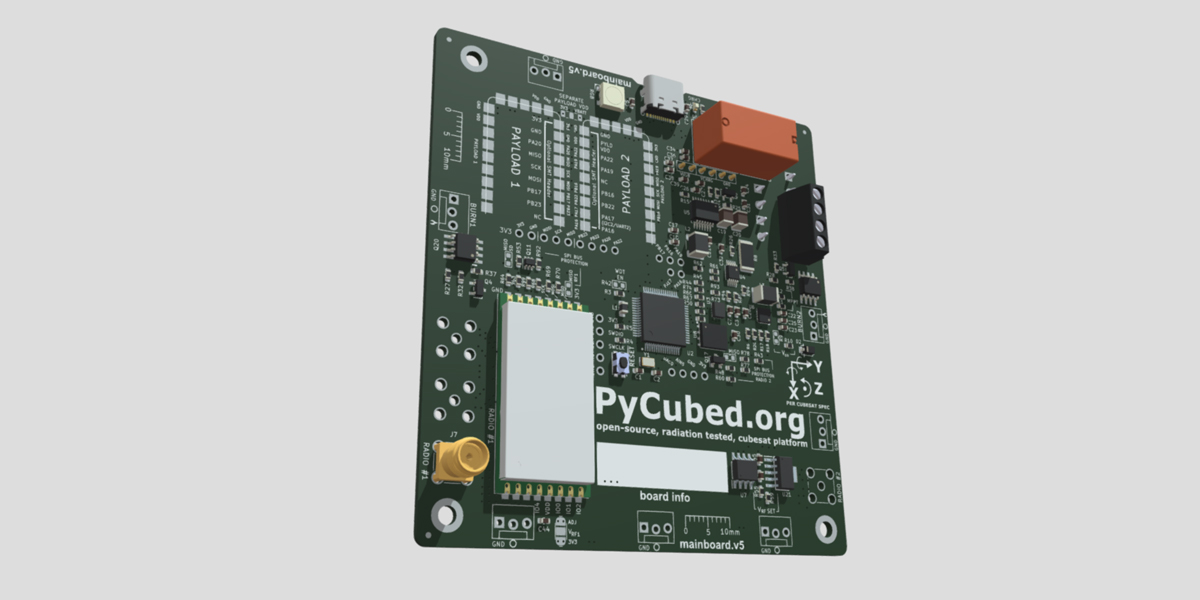
Platforms derived from widely used academic designs such as PyCubed benefit from years of cumulative experience and community validation.
2. Software Ecosystem and Student Familiarity
The most sophisticated hardware will fail if the team cannot effectively program it. Important software questions include:
- What language is used for flight code (C, C++, MicroPython, Rust)?
- Are there example missions, libraries, and templates available?
- Can undergraduates realistically contribute within a single semester?
- Is there an active community for support and shared solutions?
For teaching-focused missions, Python or MicroPython based ecosystems can accelerate learning and make code reviews, handoffs, and documentation easier across multiple student cohorts.
3. Power Handling and Electrical Integration
OBCs differ widely in how they manage power. When reviewing options, universities should examine:
- Input voltage range and total power capability
- Integrated versus external EPS (electrical power system)
- Protections against over current, brownout, and latchup
- Support for battery charging and multiple power rails
An integrated OBC plus EPS solution can simplify early missions by reducing the number of separate boards that must be designed and tested. However, more advanced programs may opt for separate EPS and compute modules for flexibility.
4. Interfaces, Buses, and Payload Expansion
Your OBC choice should match the payload ambitions of the program. Important interface questions include:
- How many I2C, SPI, and UART ports are available?
- Are there dedicated interfaces for radios, sensors, and cameras?
- Does the board support standard CubeSat connector formats?
- Is there clear documentation for pinouts and signal integrity?
A good academic OBC gives teams room to grow. First missions might use simple beacon payloads, while later missions may incorporate complex instruments, GNSS receivers, or custom RF hardware.
5. Documentation, Tutorials, and Teaching Resources
University missions must serve two objectives: fly a satellite and teach students. That means documentation quality is as important as hardware quality. Look for:
- Step by step bring up guides
- Example projects that compile and run out of the box
- Reference designs and harness diagrams
- Course material or lab exercises that can be adapted
Vendors that understand the academic environment will often provide structured learning paths, not just hardware datasheets.
6. Vendor Support, Lead Times, and Long Term Availability
Academic schedules are unforgiving. Once a launch slot is booked, teams cannot slip indefinitely. When selecting an OBC, ask vendors:
- What are typical lead times and minimum order quantities?
- How long will this hardware be supported and manufactured?
- Is there a clear process for troubleshooting and returns?
- Can they support multiple cohorts using the same platform over several years?
An OBC that disappears after one academic cycle introduces unnecessary risk to long term program planning.
7. Regulatory and Export Control Considerations
Universities must also consider ITAR, EAR, and other export control regimes when procuring satellite hardware. Using US designed and US manufactured avionics can simplify compliance for American institutions, especially when foreign students or international collaborations are involved.
Clear documentation from the vendor about export control status, ECCN classifications, and licensing requirements is essential for university legal and compliance teams.
8. Cost, Total Program Budget, and Value
The lowest cost OBC is not always the best value. Teams should evaluate:
- Base price versus included functionality (EPS, radio interface, watchdog, etc.)
- Required companion boards or licenses
- Expected lifetime in orbit versus mission goals
- Cost of student time and schedule risk
A slightly higher upfront cost may be justified if it lowers development time, increases mission reliability, and better supports educational outcomes.
Where Blackwing Space Rook Fits In
The Rook OBC from Blackwing Space is being developed to align with these academic needs. It is derived from the PyCubed ecosystem and is intended to offer:
- Compatibility with existing PyCubed style software
- Integrated power handling and robust protection
- Modular expansion for advanced payload and radio configurations
- US based design and manufacturing for academic and government programs
- Documentation and support aimed specifically at student teams
This approach allows universities to prototype on widely available PyCubed boards, then transition to a flight focused platform such as Rook for launch, while preserving knowledge and code.
Building a Sustainable CubeSat Program
Evaluating CubeSat OBCs is not just about one mission. It is about building a sustainable program where each cohort of students inherits a stable foundation and pushes capabilities forward. By focusing on flight heritage, software ecosystem, power and interface design, documentation, vendor support, export control alignment, and long term value, universities can choose OBCs that support both education and serious spaceflight.
Open ecosystems like PyCubed, combined with evolution paths such as the Rook OBC from Blackwing Space, give academic teams a practical way to grow from first beacon missions to advanced multi payload satellites without constantly starting over.

Related Articles