How Much Does It Cost to Buy Your Own Satellite in 2026?
A pricing overview across nanosatellite, smallsat, and microsatellite classes, separate from launch costs.
Satellite cost is one of the most searched and least clearly answered questions in the small satellite industry, mostly because the honest answer depends heavily on size class and payload complexity. This is a pricing landscape, not a quote, but it gives first-time buyers a realistic range to plan against before talking to a manufacturer.
Why There Is No Single Number
A satellite's cost is driven primarily by three things: its mass class, the complexity of its payload, and how much custom engineering its mission requires beyond a standard platform. A simple technology demonstration nanosatellite with no unusual requirements costs dramatically less than a satellite carrying a demanding science instrument, even if both weigh roughly the same. Any number you see quoted without context is describing one specific point on a wide spectrum.
Nanosatellite Class: Roughly 1 to 10 Kilograms
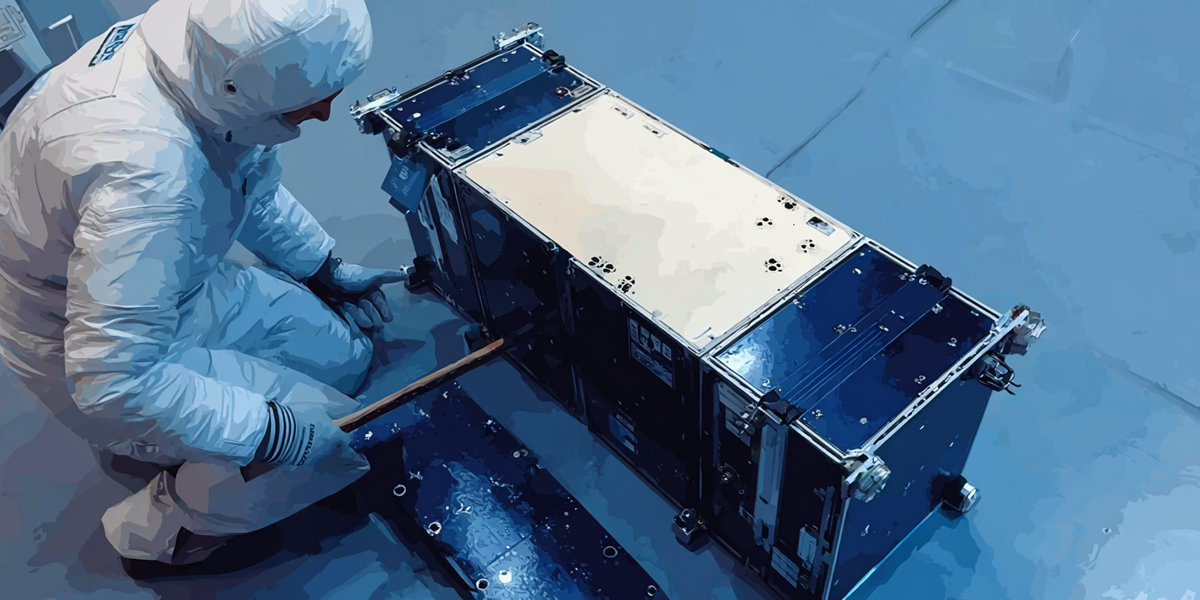
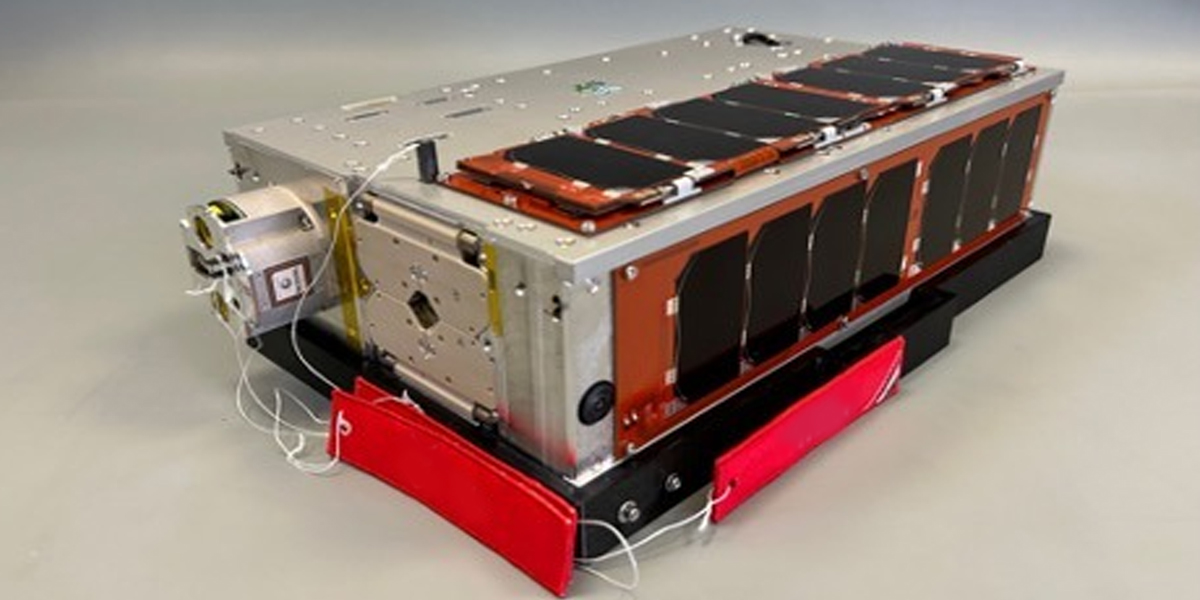
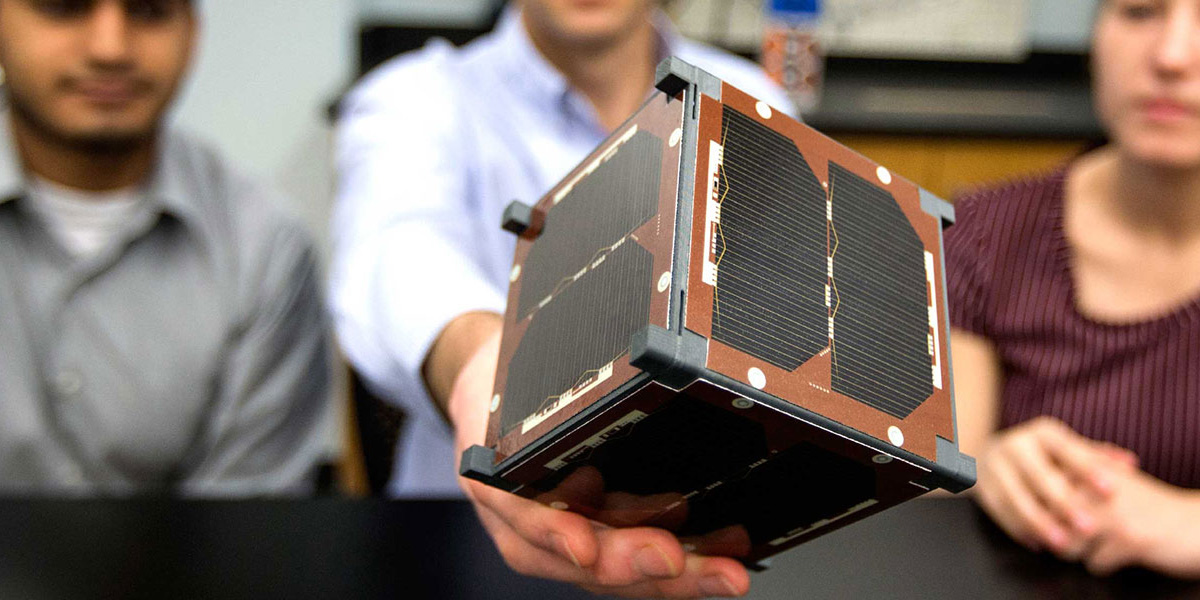
A complete nanosatellite, most commonly built as a 1U to 6U CubeSat, typically costs from the low hundreds of thousands of dollars up to around 1.5 million dollars for a complete, integrated, flight-ready spacecraft, depending on payload demands. A straightforward technology demonstration or basic communications payload sits toward the lower end of that range. A spacecraft with tight pointing requirements, a demanding power budget, or a custom payload interface sits toward the higher end. This range covers the bus, integration, and standard testing, but typically not launch.
Microsatellite Class: Roughly 10 to 100 Kilograms
Microsatellites scale up from there, generally into the low millions to tens of millions of dollars depending on payload sophistication, since a larger platform can carry more capable instruments, more power generation, and more propulsion capability, all of which add cost. Most first-time commercial buyers do not need this class unless their payload specifically requires the additional power, pointing precision, or aperture size that only a larger platform provides.
Launch Is a Separate, Significant Cost
None of the above includes getting to orbit. Most small satellites fly as rideshare passengers, sharing a launch vehicle with many other spacecraft, which is dramatically cheaper than a dedicated launch. Rideshare pricing for a nanosatellite-class payload commonly runs from roughly 50,000 to 300,000 dollars depending on mass, orbit, and how far in advance you book a slot. It is worth asking any spacecraft manufacturer whether their quote includes launch arrangement, since this is the most common point of confusion in a first-time buyer's budget.
What Drives Cost Beyond Size Class
Two satellites of identical mass can cost very differently based on a handful of factors: how tight the pointing accuracy requirement is, how much data needs to come down and how fast, whether the payload needs custom thermal or power accommodation, and how much schedule pressure is on the program. A rushed timeline, counterintuitively, sometimes costs more, since it compresses engineering work into fewer hours without reducing the total amount of work required.
A Real-World Reference Point
Blackwing Space's Baby Bird mission, a 1.5U Sparrow-platform nanosatellite built for Tennessee-based customers, moved from signed contract to orbital deployment in about five months, carrying three distinct commercial payloads, an optical beacon, a memorial capsule payload, and a radiation-shielding material sample. A multi-customer mission of that scale and timeline sits within the nanosatellite cost range described above, and is a useful anchor point for what a well-scoped first mission actually costs in practice, rather than a theoretical estimate.
Insurance and Risk
Launch and in-orbit insurance is optional, but many commercial missions with real financial stakes carry it. Expect a premium in the range of 10 to 20 percent of the insured hardware value, covering launch failure and early on-orbit anomalies. For a nanosatellite-class mission with a modest hardware value, this is often a few tens of thousands of dollars, small relative to the overall program cost but worth budgeting for rather than discovering after the fact.
Ground Segment Costs Add Up Over Time
Even after the spacecraft is built and launched, you need a way to communicate with it. Shared ground station network access typically runs a few thousand dollars a month, scaling with how often you need contact. Operating your own dedicated ground station costs considerably more upfront but removes the ongoing subscription cost over a multi-year mission. First-time buyers often find it sensible to price at least one year of ground segment access into their total mission budget, rather than treating it as an afterthought once the spacecraft is already in orbit.
How to Get an Accurate Number for Your Mission
The most reliable way to get a real number is to bring a manufacturer your actual payload mass, power draw, data volume, and pointing requirement, and to ask for a quote that separately itemizes the bus, payload integration, testing, and launch arrangement. Any quote that bundles everything into a single figure without that breakdown is harder to compare against a competing offer and harder to budget against if your requirements shift.

Related Articles