Satellite-as-a-Service: Renting Capacity Instead of Buying Your Own Spacecraft
A decision framework for choosing between owning a satellite and buying capacity or data from an existing constellation.
Not every organization that needs satellite data or connectivity actually needs to own a spacecraft. Satellite-as-a-service, buying capacity, data, or a hosted payload slot on someone else's constellation, is a genuine alternative to buying your own satellite, and for some missions it is the better one. Here is how to decide which path fits.
What Satellite-as-a-Service Actually Means
The term covers a few distinct models: buying imagery or sensor data from an existing Earth observation constellation on a subscription or per-tasking basis, buying bandwidth on an existing communications satellite network, or hosting your own instrument as a payload on someone else's spacecraft rather than building and operating a full satellite yourself. Each model trades ownership and control for lower upfront cost and faster time to data.
When Buying Data or Capacity Is the Better Choice
If your actual requirement is the data or the connectivity, not the spacecraft itself, renting capacity usually gets you there faster and cheaper. An organization that needs regular imagery of a specific region, for example, does not necessarily need exclusive tasking rights or ownership of the satellite producing that imagery. Subscription-based access to an existing Earth observation constellation can deliver that data within weeks, compared to the months required to design, build, and launch a dedicated spacecraft. The same logic applies to communications: if you need connectivity in a remote area, buying airtime on an existing satellite network is almost always faster than building a custom communications satellite.
When Owning Your Own Spacecraft Still Makes Sense
Ownership becomes the better choice when you need exclusive control over tasking priority, when your payload is genuinely novel and no existing constellation offers an equivalent service, or when the mission itself, not just the data it produces, is the point: a technology demonstration, a scientific instrument that needs to fly on your own terms, or a commercial product where owning the spacecraft is part of the value you are delivering to your own customers. Hosted payload arrangements sit in between: you get your own instrument into orbit on someone else's bus, sharing cost and schedule risk, while still controlling your specific payload's operation.
A Hosted Payload Example
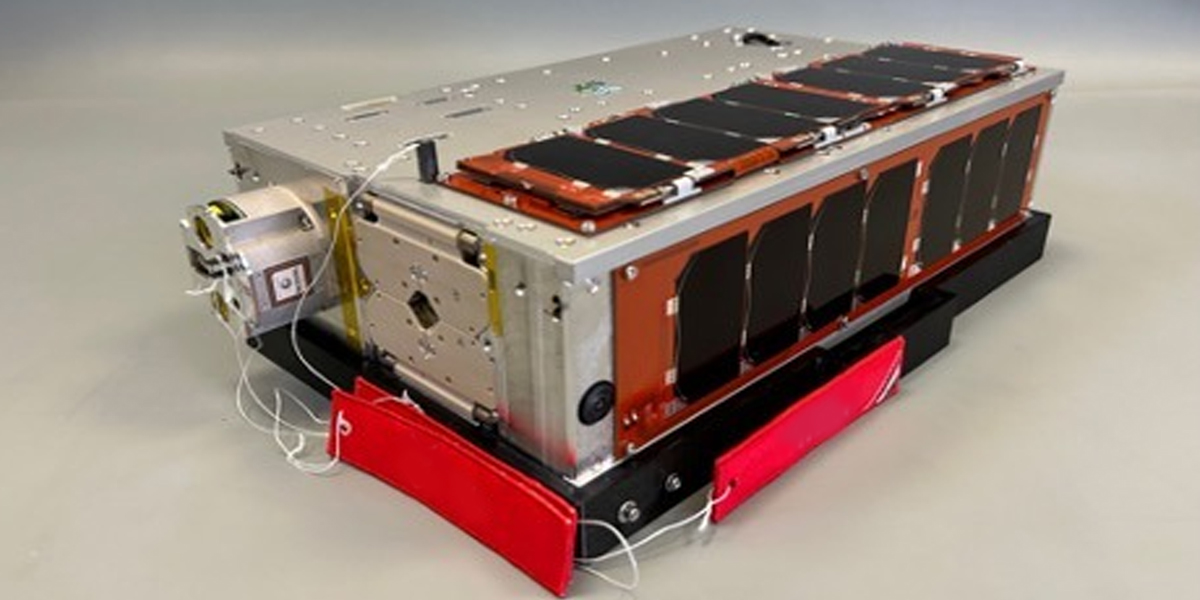
Blackwing Space's Baby Bird mission demonstrates the hosted payload model directly: three separate commercial customers, Manifest Space, Celestis, and Melagen Labs, each had a distinct payload, an optical beacon, memorial capsules, and a radiation-shielding material sample, integrated onto a single Sparrow 1.5U spacecraft rather than each building and launching their own dedicated satellite. Each customer got their payload into orbit on a shared timeline and shared cost base, without owning or operating the spacecraft itself.
Cost Comparison in Practical Terms
Buying data or capacity typically runs as an ongoing operating expense, a subscription or usage fee, rather than a large upfront capital cost. Owning a spacecraft means a significant upfront investment, in the hundreds of thousands to low millions of dollars for a nanosatellite-class mission plus launch, followed by lower ongoing operating costs. Organizations with a short-term or uncertain need often prefer the operating-expense model; organizations planning a long-running program with stable requirements often find that ownership pays for itself over a multi-year horizon.
Run the Comparison Over Several Years, Not One
The upfront cost of owning a spacecraft is front-loaded, while a data subscription or hosted payload fee is spread out evenly over time. It is more informative to compare the two options over a three-year horizon rather than the first year alone. A subscription that looks cheaper in year one can cost more than ownership by year three, particularly for a mission with a stable, long-running requirement, while a short-term or uncertain need almost always favors the subscription model regardless of the multi-year math.
How to Decide
Three questions tend to settle it. Does an existing service already deliver what you actually need, at the quality and tasking priority your mission requires. Is your payload or mission genuinely differentiated enough to justify owning the spacecraft that carries it. And does your budget favor a predictable operating expense or a larger upfront investment with lower long-term cost. Most buyers researching how to buy a satellite have not yet asked these three questions, and a meaningful fraction discover that renting capacity, or hosting a payload on an existing mission, gets them to their actual goal faster than owning a spacecraft ever would.
Whichever path fits, it is a good idea to get a specific number from at least one provider on each side of the comparison, an ownership quote and a subscription or hosted-payload quote, before deciding. Comparing an actual quote against an actual quote, rather than a general cost reputation for each approach, is the clearest way to know which one is really cheaper for your specific mission.

Related Articles