Choosing the Right Blackwing Platform for Your Payload
So you've got a payload that needs to go to space. Maybe it's a camera, a scientific instrument, or a communications module. But before you can launch it, you need to answer a fundamental question: Which Blackwing platform is right for your mission?
Let's break this down in a way that makes sense, even if you've never worked with CubeSats before.
What's a "U" Anyway?
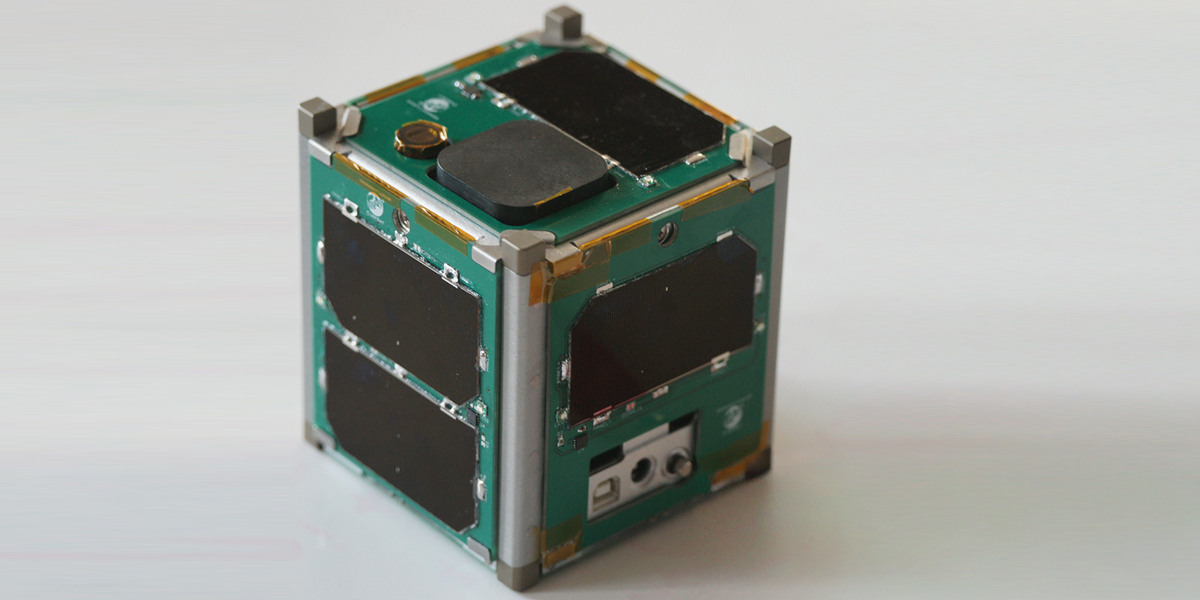
The CubeSat standard was born in 1999 when professors Jordi Puig-Suari and Bob Twiggs wanted to give students a way to build real satellites without needing NASA-sized budgets. They created a brilliantly simple unit of measurement: 1U (one unit) equals a 10 x 10 x 10 cm cube.
That's it. One liter of space. About the size of a Rubik's cube.
This standardization changed everything. Suddenly, launch providers could design deployment systems that worked for any CubeSat, and universities could actually afford to go to space.
The Blackwing Space Platform Family
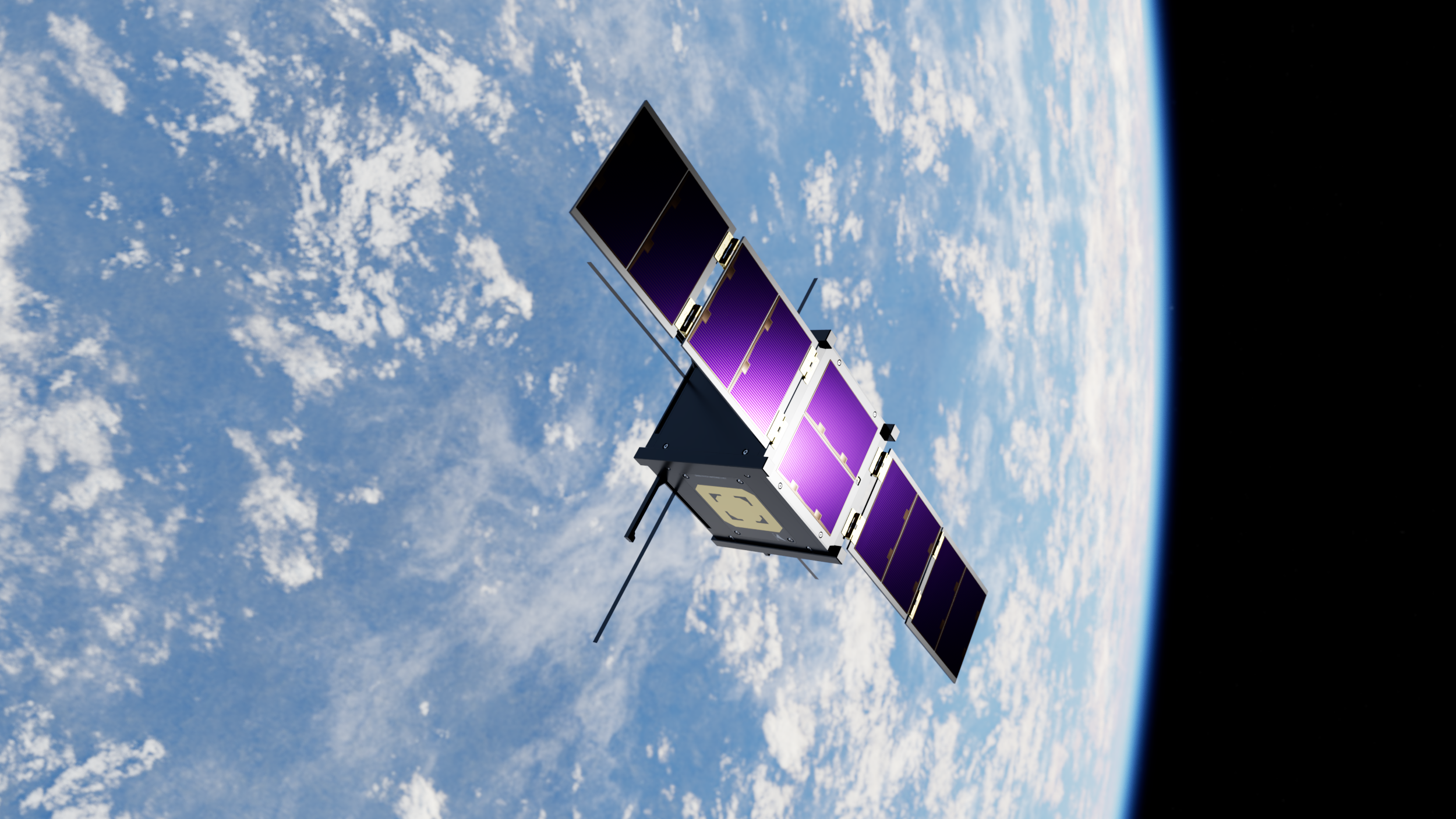
At Blackwing Space, we've designed three platforms that embrace the CubeSat standard while maximizing what you can actually do with that space. Each platform is built for Space 3.0: smaller, smarter, and affordable.
Sparrow (1U): 10 x 10 x 10 cm Your compact solution with 0.5U of payload volume (500 cm³), accommodating up to 1 kg payload mass and 10W of orbital average power. Perfect for focused, single-purpose missions.
Kestrel (3U XL): 10 x 10 x 30 cm The versatile workhorse with 2U of payload volume (2,000 cm³), supporting up to 4 kg payload mass and 30W of orbital average power. This is where capability meets accessibility.
Osprey (6U XL): 20 x 10 x 30 cm or 10 x 20 x 30 cm The powerhouse platform with 4U of payload volume (4,000 cm³), handling up to 8 kg payload mass and 60W of orbital average power. When your mission demands serious capability.
Understanding Payload Volume
Here's what makes Blackwing platforms different: we tell you exactly how much space your payload gets. No guesswork, no surprises.
While the Sparrow is a 1U platform, you get 0.5U (500 cm³) dedicated to your payload. The Kestrel gives you 2U out of its 3U form factor—that's a generous 2,000 cm³. And the Osprey delivers a full 4U of the 6U total, providing 4,000 cm³ for your instrument.
The rest? That's where we've engineered in everything else: power systems, communications, attitude control, onboard computing, and structural components. It's all accounted for, so you can focus on your payload.
Calculating Your Payload's Platform Volume
Ready to figure out which Blackwing platform you need? The math is straightforward:
- Measure your payload in length, width, and height
- Calculate the volume by multiplying those dimensions together
- Convert to U by dividing by 1,000 cm³ (since 1U = 1,000 cm³)
- Match to a platform based on available payload volume
Example: You have a camera that's 8 x 6 x 5 cm.
- Volume = 8 x 6 x 5 = 240 cm³
- U volume = 240 ÷ 1,000 = 0.24U
- The Sparrow is your platform (0.5U payload capacity easily accommodates 0.24U)
Another example: Your earth observation sensor is 12 x 10 x 15 cm.
- Volume = 12 x 10 x15 = 1,800 cm³
- U volume = 1,800 ÷ 1,000 = 1.8U
- The Kestrel is your match (2U payload capacity fits your 1.8U sensor)
Quick Decision Guide
Choose Sparrow if:
- Your payload is under 500 cm³ and 1 kg
- You have a focused, single-purpose mission
- You need 10W or less of orbital average power
- You want the most affordable entry to space
Choose Kestrel if:
- Your payload is 500-2,000 cm³ and up to 4 kg
- You need reliable power and communications (30W OAP)
- This is your first mission (Kestrel is the sweet spot)
- You want proven versatility
Choose Osprey if:
- Your payload exceeds 2,000 cm³ or requires up to 8 kg
- You need 60W of orbital average power
- Mission complexity demands advanced capability
- You're flying multiple instruments or need redundancy
Why Fly Blackwing?
All three platforms are compatible with major deployers (SEOPS Equalizer Flex, Maverick Space NLAS, Exolaunch EXOpod Nova), giving you flexibility in launch opportunities. And because we're building for Space 3.0, you get consistent, transparent, affordable pricing with truly commercial off-the-shelf systems.
No more guessing. No more custom engineering just to figure out if your payload will fit. We've done the hard work so you can focus on your mission.
Next up: We'll dive into mass budgets and why your payload's weight matters just as much as its volume.

Related Articles